





Talking Science
Podcast Interview with Robert Krulwich
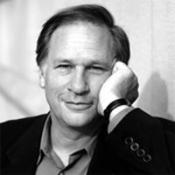
Dr. Biology: This is Ask A Biologist, a program about the living world, and I'm Dr. Biology. Some things in biology and any kind of science can seem complicated. Let's face it. Some of the stuff is hard to understand, even for scientists. So, how do you take a complicated science subject and talk about it so everyone can understand? Not everyone can do this.
My guest today has been able to take many complicated science and other topics and explain them both on radio and television. Robert Krulwich is a science reporter who has been telling the story of science on programs like Nova, Frontline, and NOW with Bill Moyers. You can also hear him on the NPR radio show, Radio Lab, which he co‑hosts with Jad Abumrad. He has a long list of awards that he has won for his work including two Emmys. Not bad.
He's visiting Arizona State University as part of the Darwinfest. And it just seemed like a good idea to talk to him about how he is able to talk about science in a way that anyone can understand and have fun while doing it. Welcome to the show Robert Krulwich.
Robert Krulwich: Thank you.
Dr. Biology: Now, I did a little research on you and the quote I like from you is "I like talking about invisible ideas and trying to find a way to explain what you've learned so people can grasp it." So, just what are invisible ideas?
Robert: A visible idea would be "Oh my God, that building is on fire. [sound] Watch the fire burn or that's a tsunami here it comes and whoosh. That's a visible idea or look how sad or look how handsome or look how beautiful that movie star is or that president of the United States is, whatever.
An invisible idea would be one which you can't see. So Darwin's ideas. You can look out the window at trees and the sky and flowers and stuff, but they don't tell you anything just by being there. The idea is something you have to think up or think out or find and if you are in a visual medium, like television, there are a lot of things that you want to say, but you have to put something on the screen. That's the question. So what do I put on the screen? That's the question.
Dr. Biology: You brought up the idea of television and we are doing basically radio here and you do both...
Robert: Yeah.
Dr. Biology: ... radio and television. And as much as people love television because it gives both that visual plus the auditory. You hear the voice, you see the pictures. There is something about radio that I find really intriguing and I think it is back with the storytelling.
Robert: It is. I think it's actually, the fancy word here would be granular. That is, here's the thing. If you want to look at the TV so what do you do? You walk into a room and there is a box, usually 10, 11, or 12 feet from wherever it is you are standing or sitting. And between you and that box, there could be a sister. There could be a mother. There could be a cat. There could be a noise from outside. There are a whole lot of things that you could notice because the box is just a piece of furniture in the room. And an awful lot of distraction can take place. Also, what do you do with the box? You stare at it. And so whatever is coming out of that box has to reach out and grab you across that distance and across or beside all those distractions.
Now, think about the radio. In the radio, if I say to you "OK, let's think of a little house on the top of a mountain." On TV, I would have to put a house of my choice on top of a mountain of my design and someone would have to look across the room and decide if they could see the house and agree if it was the kind of house they thought about. So, there's 10 percent of the people saying "Ah, that's not a house. What kind of a mountain is that?" and so forth. So, there's an argument there right away.
If you are listening to me, I am already between your ears and you don't understand this, but you start to paint with me. You paint the mountain. You paint the house and together we've now got essentially a duet. I'll say stuff. You'll paint stuff. And because we are doing it together you are unwittingly my co‑author and, therefore, I could take you to more places on the radio than I can on TV because you are painting us there.
Dr. Biology: Now, I will put you on the spot. You prefer radio over TV?
Robert: Oh, it really depends. They are both fun. If you have ever been in a high school musical and you want to be at the front of the stage, and singing the big song on TV, it's much more focused. There you are and you can use your face, your body and there are cameras around and lights. You're the center of attention. That's fun. On the radio side, if you've ever closed your eyes on a dark night and had your Mom and Dad tell you a really cool story by campfire or something, that's the radio version where essentially you cuddle the story. And people can be in both moods. The same person can want to dance and sing and be the star and then later in the day want to close their eyes and join someone else's late-night story. So, it really depends on the mood and frankly on the story.
Dr. Biology: Right and another thing that came about especially with this generation where they like to multitask.
Robert: Right.
Dr. Biology: Now, whether they are doing it well or not doesn't matter. I've heard a lot of people talk about—especially the young college students—they like the idea that they can be listening to something. They could be working on their homework. They could be texting on the computer and they can do all these things. In the past, if you were listening to the radio, you might miss something, but now we have radio coupled to the Web. So now, you can actually download these shows. So, for example, with your show that you have called Radio Lab...
Robert: Right.
Dr. Biology: ... I was just up in my office. I could listen to you. I could actually download the MP3, listen to the show at my leisure. If I miss something, I can replay it.
Robert: Yeah.
Dr. Biology: That's really wonderful.
Robert: God! It's so different from what it was ten years ago. So, there are a whole lot of people who went into this business and the business was you think very hard and you work very hard and then you come up once on some network schedule and you say "Here I am. La, la, la, la, la, la, la, la, goodbye, forever" because that would just disappear. There was no way to get it back. The only person who would have the performance was usually you and then after a while, you would throw it out or sometimes the museum would come by and say "Could we have that?" or sometimes if it were a fancy organization the whole oeuvre would go into a museum or something. But, essentially, you were in the air—ephemeral is the fancy word. You were in the air and gone.
Now, you are more like a book. You're parked somewhere. Anybody who wants to can pull it down, as you just said, if you miss something ‑ and Radio Lab is a total accident. When we began thinking about that ‑ it was just me and a friend ‑ we were designing something that was highly produced, very complicated, high styled. There weren't a lot of them. They maybe made 10, 11, 12 a year. That's it. I didn't know what that could be. There was no season of anything except maybe the Sopranos towards the back end that is so short. But then, it turned out that we had made something that happened to fit.
If you are on a treadmill or you are in car or you are cooking or you are painting or working in a lab or something and you are doing something a little bit mindless and you want to listen and get swept away, then all that production is very cool particularly if you can put it between your ears and listen to it all.
So, we were making something for an audience that we didn't know existed and then the audience just arrived. I remember very precisely what happened. The radio station that helped us do this, asked us to perform it somewhere, just to see who would show up because they didn't have money to take ratings.
So, we asked the Apple Store in New Your City would they just host us and there're 150 seats in the upstairs balcony. We made one mention of it on the local radio station and then we went to the event and at these events, Chad, the guy I work with, he can play the radio on a laptop computer and we can basically improvise all kinds of stuff and he can tap a key and it's raining. He can tap another key and a dog is barking. He can tap another key and a sailor is singing and whatever I need to do, he can do.
So, it's sort of like a performing radio kind of gig. We went up there and I figured it, there would be maybe half-filled and there were like 300 people. There were all... the fire department had to move some of them downstairs. A few months later, we asked people to come by for a screening. We wanted to ask people to listen to something. We rented a 225 seat theater and 1000 people came and all of a sudden we thought, "oh, wait a second," this feels like a garage band, like it's your first hit. The people, the way they looked at us. I said, wow, these aren't normal looks, these are like "I'm going to eat you up" kind of looks.
It's a really deep surprise to be in a generally sad time where people are driving around desperately trying to find out who to talk to and how to talk... We just walked through a door and suddenly happened to be in the exact seat where we couldn't have dreamed about this and we are a little bit amazed. You know?
Particularly since these podcasts become available to anyone who has a computer and who speaks English. That's all you really have to do. And that isn't just fifteen to thirty-year-olds in the United States as it turns out.
It's an enormous number of kids along the Pacific seaboard of China and in northern Vietnam. Its suburban kids in Buenos Aires. It's kids in Herat in Afghanistan. The mail we're getting is from kids everywhere and I had no idea, not a clue that this was in the wind.
Dr. Biology: I would have had a little hint only because we've been doing 'Ask a Biologist' for now, over ten years. Because we're on the web, we're international, so we do get questions from all around the world and it does amaze me and the one thing they have to be able to do is to read and write English.
Robert: That's right.
Dr. Biology: We'll we're talking about this media and the change and when I work with students now, the definition of old is anyone over eighteen. You and I are unfortunately are going to be considered old under that definition.
Robert: Oh yeah.
I had a thing the other day. I walked out into a stage in Chicago. I said "how many people in this audience" ‑ there must have been 800 or 1200 people there ‑ I said, "How many people were born before 1960?"
No one. Not a one. "How many in 1962?" It was 1967 when I got the first clap from the darkness. I said, "What are you doing here?" He says "my daughter's twenty‑year‑old birthday. I have no idea who you are" and that's the strange part of this. It is very, very, very ‑ to me, it's a little disappointing a lot of people dream of getting these young audiences. But, I don't quite understand where my people are.
It turns out that the business of plugging into a computer and downloading something is not normal for people over fifty. So, there are going to be fewer of them for a while and it is tribal. There are tribes of listeners.
So, I can be on All Things Considered, or Morning Edition. I can go on the evening news with Charles Gibson and I don't think there's anybody, anybody who's in the NPR audience who's watching the 6:30 evening news on ABC. It's like going from Venus to Mars.
[laughter]
Dr. Biology: Well, it's part of this idea of how communication is changing and the different media formats. One of the questions I had was ‑ we're playing in this world that we think is, not necessarily cutting edge, but it's really moving out there. But is there other communication media that we're not playing with. So we're not reaching that audience. Or the younger generation is already doing?
Robert: When I started, I was born in 1947 so there were a lot of people born in my year and the year after the year just after that because it was right after World War II. When I turned eighteen, nineteen and twenty, there were a lot of people who were starting businesses.
My first one which was Pacifica Radio was started by people of my age. My second one Rolling Stone magazine was started by people of my age. My third one National Public Review was started by people of my age.
I didn't work for an adult. I didn't work for a person with a tie until I was thirty years old ‑ Dan Rather, CBS ‑ and I felt the difference. But, by that time, I had worked with my own friends more or less for eight years and I suspect that is exactly what's about to happen. Because the technologies have become so omnipresent, everybody has computers, everybody has friends and everybody has friends who are cool and good at something they're not.
I think what's about to happen is that new vortexes of people, emphatically on the younger side I suspect, will begin creating product for each other and this whole thing of "Oh my gosh, what's going to happen to the New York Times" and "What's going to happen to NBC" and "What's going to happen to Time Magazine" is what's going to happen to the inventions and creations of the 1930s and the 1890s is I don't know ‑ but I suspect they will be, not eliminated, but they will be their new competitors will be things that are just now being thought of by people thought of by people who are still probably in high school or in college.
Dr. Biology: Right. Well, we see some of that creeping in with these blogs, for example. We talk about this all the time. What this show is about, typically, is I have a scientist sitting across from me or a couple scientists and we talk about all the cool things they're doing. But, this show isn't about turning everybody into a scientist. And one of the questions or one of the things I try to work with is the idea of understanding and enjoying science. Now, watching you and listening to you, I get the idea you really enjoy science. As a matter of fact, I'm wondering, are you really secretly a scientist at heart?
Robert: No, I'm really secretly a slow processing kind of dumb person at heart who feels if I get a chance to sit long enough at the material that I'll figure it out and who is willing to say dumb stuff to the people who know things and is willing to whisper it to other people who are trying to figure it out. [whispering] "Do you understand what he just said"? Kind of thing.
There's a sort of political part of this too. I feel in a democracy, there is a presumption that the crazy people like your silly first cousin who doesn't ever care or think about anything. Your strange mother who gets all mad at stuff that is probably something she's practically making up. It's a little odd.
Dr. Biology: You've met my mother?
[laughter]
Robert: That you can say, let's get rid of kings and philosopher kings and let's replace the way of organizing society by a mob of slightly nutty people and they will somehow all together do something wise. Maybe not on time every time, but they'll do wise. That's the principle of democracy and that somehow ordinary folks, collected together as silly, dumb, and irritating as the individuals may be, in a pile there is a wisdom there somehow. And I think that one of the things that I try to model in the work that I do is I say, "Look. Everybody doesn't have to be a genius, and you don't have to bow down to all these people with pedigrees."
You are allowed to ask them questions, and you're allowed to think a little bit about what they've just said. You're allowed to be proud and have a mind of your own. And don't be too scared by the fact that it's the Wizard of Oz thing, that if people come behind big curtains and are loud and things.
There are people, of course, who are smarter than you. But, you're smart enough to sit there at the table of you and ask real questions. That's kind of what I think I'm doing.
Dr. Biology: There is an art and a science to asking questions.
Robert: Yes.
Dr. Biology: As a reporter, have you found yourself in this position...? Well, you will. You're juggling. The way I see it is you're listening to the person that's talking. You're trying to figure out what they're saying. Based on what they're saying, you're trying to make up a question. Then at the right time, you need to ask the question. Is that pretty much the way...?
Robert: But, isn't that like a date?
Dr. Biology: [laughs] OK. So, is that how you approach it? Like a date?
Robert: Yeah. Yeah. I think partly you're trying to be sexy and make an impression, but not too much because you really are trying to figure out do you like her or don't you like her? Partly it's the fun of exploring. The truth is that if you're really going to fall in love with somebody, you're going to want to fall in love with them not just physically. That will happen, but it will happen early and then you'll have to balk after that.
This is not even generalized. This is your best friends as well as your girlfriends and boyfriends. These are the people who keep being interesting to you. So, you've got to be interesting to them, and you've got to keep the conversation going. Sometimes that just happens, and sometimes over a dinner nobody's saying anything. You think, "Should I say something?"
I think this form of talking for a living is an extension of the date in some ways. But, of course, there's a purpose. So, it's a didactic date. [laughs] I'm not only going to meet you, but I want to find something out about the world through you.
Dr. Biology: Right. So, when you're out hunting for your dates, in other words, where do you get your ideas?
Robert: That's really weird. I'm married to a reporter who's always quite sure that this one that she has this morning is the last one she'll ever get. She gets scared, as she finishes each story, that this is the end of her career. I don't know why. I've never had that problem in any of the areas that I've covered.
But, it must have been something about our family. My sister and I can walk down the street, and we can just see thing after thing. She can out‑curious me. "Why do we never see a dead pigeon?" "I don't know." That kind of thing. We just can somehow operate that way. It's a real blessing.
I've been scared about whether I make my deadline. I've been scared about whether I have the energy. I've been scared about whether I have the brainpower to process something, but I've never been scared about the next question. There seems to be a long bus line of questions waiting for their turn to me.
Dr. Biology: But I bet you there are some things that you don't like about your job. Can you name one?
Robert: Well, I have three jobs.
Dr. Biology: Three?
Robert: That's the thing that I don't like, that I have three jobs.
Dr. Biology: OK. You have too much.
Robert: Too much.
Dr. Biology: Too much. OK. Well, I'm with you there. What's the best part?
Robert: Oh, I think the best part is I wake up every morning and pretty much get to spend the day thinking about something that I chose to think about. The three jobs that I have at ABC News, at NPR, and at Radio Lab are all self‑assigned jobs.
So, I come into ABC and say, "How about this?" And they say yes or no. I come into NPR and say, "How about this?" They say yes or no. And I go into Radio Lab and say, "Shall we do this?" And we say yes or no. So, I really get to spend almost every day of my life doing something that I want to do. That's amazing!
Dr. Biology: It is.
Robert: I must have been like an incredibly fabulous giraffe or something in my last life to pull this off. I don't know what happened, but it's amazing. And the other thing that's kind of cool is that in the business of doing it, I have ‑ in TV particularly but in radio as well; it's a very collaborative medium; so you have to work with other people ‑ I have to work with artists. And because I'm sort of ranging around thinking about how to do things, I work with dancers. I work with theater people, and I work with scientists. I work with engineers, photographers, cameramen, and whomever.
I have met so many amazing people along the way that you develop a body of work. But, you also develop of body of affection with just the people you've bumped into. Sometimes these days, I don't really know which is the greater achievement, and I've really fallen in thrall or in love or in rapture or in envy with so many different people at this point.
Dr. Biology: It's a wonderful way to go out and meet people, I find.
Robert: Oh, my gosh! Yeah.
Dr. Biology: On this show we do three questions for the scientist, and I've modified them slightly. This is what you do: you steal from the best or some of the best. This is James Lipton, and he always does this "Inside the Actors Studio."
Robert: Yes.
Dr. Biology: So, we'll start off with when did you first know you wanted to be a science reporter? Was there like a spark?
Robert: Yeah. I was assigned a story by Diane Sawyer, which was about a lady who was doing some very heroic work about a disease. The disease was called Huntington's Chorea ‑ I'd never heard of it. And the problem with Huntington's Chorea is it's caused by a single mistake in your gene. I didn't know what a gene was or anything. I started the story and I thought, "Whoa! This is so interesting."
As I walked around ‑ I was at the time being an economics reporter ‑ I thought, "Wow! The people who I'm talking to ‑ these would be called later, I learned, bench scientists: people who actually went into a lab and tried to figure stuff out ‑ are over the moon at the moment.
They are so happy to be alive right now because there were genome projects going at the time, and machines were being invented to turn those genome projects into kind of scurrying, fast‑moving genome projects. And people were learning so much so fast that a world was opening up to them. And that excitement, their excitement...
This is what a reporter does. You put your hand on different pulses. And the pulse of these scientists was racing so fast that I thought, "I think I'd better stay here because this is really interesting."
Dr. Biology: I'm glad you have because I've enjoyed so much of your work. But guess what? I'm going to take it all away. You can't be a reporter. No kind of science or any other kind of reporting or communication. You're going to have to step out of that skin. What would you be or what would you do?
Robert: Hmm.
Dr. Biology: The sky's the limit. I'm going to let you really have fun.
Robert: I guess I'd be a teacher probably. I don't think I want to be President of the United States, and I don't think I want to be Johnny Depp; that's taken. So, if I could be anything at all, I'd probably be Tony Bennett or Louie Armstrong. But, if I can't be them, I'd be a teacher.
Dr. Biology: What advice would you have for a young communicator out there, the one that thinks that they want to be the next to you or the next Brian Lamb? Or we'll stay more in the science world, someone that really wants to communicate science. What should they do?
Robert: I think what they should do is they should do it. Because it's not like you have to now wake up and say, "OK, I'm going to send letters to NBC and hope for a letter back saying, "Yes, you can pour coffee for the assistant who pours coffee for the lady who gives papers to the man who gives pencils to Tom Brokaw." I mean, that's an option.
But, if you just do it, if you just go with your friends or whatever and just say, "OK, so what do I know about..." and you start telling stories. This is the first time I can think of, really, where the entire world is available to anybody.
So, that's silly because you'll be mostly ignored, but you will be mostly ignored. Someone might bop by and accidents do happen, so I would say do it. And then, if you find that there's a certain kind of joy opening up in you and you'll really find you're liking it, then do it more and find out who else does it and make friends with the other doers.
Any time you see somebody who is doing it, that is, telling stories on the radio or the TV or the web or whatever outlet you happen to be operating in, you've got to find someone who is doing it, and if they know more than you do seduce them somehow.
Dr. Biology: Yeah, take them out to lunch.
Robert: Take them out to lunch and see if you can't get them to do it with you. So, I would say that more than anything.
Dr. Biology: We have students that submit audition tapes to ‑ and this is showing my age; I say audition tapes, but they're not tapes any more ‑ to Ask A Biologist to be on the show. They're a co‑host. Part of the thing about doing these auditions is telling a story. I thought, maybe, you could give some tips on how do you start out on this journey in telling a story.
Robert: Well, you're already on the journey, probably. If you're answering an ad like that, if you want to be on the radio telling a story, that means you must have told stories to your friends on the school bus, to your friends late at night. You must be one of those kids who either tells them well or who writes them well.
So, if you're already that, then give yourself a pat on the back and say, OK so I'm on first base. Now, how do I get to second base? The second base question is you just have to do it a little more purposefully and a little bit more regularly and a little bit more determinedly, but it's just a difference of degree.
It's like if you're in the high school play and you're dreaming about Broadway, you should go to a Broadway play. It's sort of uncannily like the high school play only better in every way.
Well, the storytelling business is just like storytelling but better in every way. So, what you have to do is get better, but you don't have to learn something completely new that you haven't already sort of imagined before. You're already in the game. You just have to learn to play it better. So, it's like being a natural athlete. You like going out. You like moving your body. You like running, da da da. You already know the rules of the game, but you have to get better.
So, if you were Ted Williams or Tiger Woods or whatever, you just practice, practice, practice, practice, practice, practice, practice. If you were Mozart, you'd just practice, practice, practice, practice, practice, practice.
So, if you want to be a storyteller, you just practice, practice, practice, practice, practice, same, same, same.
Dr. Biology: Do you need to do it with a recorder, or can you just practice without doing that?
Robert: It depends. If you're writing it down, no, you wouldn't need a recorder. You just need a pencil. But, yes, you have to do it and then it makes sense to share it because the story is a communication. So, if you're just telling them to yourself, there are people who have done that; artists who painted for themselves, right? Writers like Proust who wrote mainly for themselves and then kind of get a big splat at the end of the day, but for people who want to make a living at it, yeah, you've got to tell somebody who you're doing.
And since it's a story, you tell your story to somebody. So, you just find an audience. Luckily, the web is there, but so are other people. The other thing I guess you do is you start listening and watching and reading a little bit differently. Instead of going and watching TV, you look and see, well, who made that thing? And you find out their address, and you look up the names.
Then, when you write them, if you choose to, you won't write, "Gee, I really love your show. Signed Johnny." You'll write, "Gee, Mr. Bill Simmons, I noticed you wrote Episode 14 of Arrested Development. I thought it was incredible, particularly the part where hmm said to hmm and this went to that. I want to direct something like that, too. Would there be any chance that you...?"
You can't write a fan letter. You have to write a colleague letter.
Dr. Biology: Right, right.
Robert: Different kind of thing. A self‑appointed colleague, the "I want to be you" letter. The "I want to be you" letter that succeeds. The "I want to be you" letter that's homework because I want to be you because I saw your performance, your writing, your article, heard your story, saw you on TV when you mmm da mmm ba dum de dum, and I wanted to know how you did that. That's a real letter.
Dr. Biology: Right, and that goes back to even the writing skills, the things you're learning in English class actually could be used.
Robert: Right.
Dr. Biology: I do have one last question here because you sat in this symposium yesterday. We had these mild‑mannered ‑ this is a classic, you know ‑ mild‑mannered Clark Kent. Well, these are mild‑mannered entomologists, the people that go out and collect bugs, and some people that were really into collecting plants and fish.
Almost everyone of them, if you just saw them on the street or sat down with them, you would think that they live a rather bland life, is what somebody might say. They told some of the most amazing stories.
Robert: Yes, they did. Yes, they did.
Dr. Biology: Were you surprised?
Robert: Yeah. I thought it was, you know, kind of like a Hollywood movie kind of thing. And then the water came roaring down the... I was... I... I was gasping for breath. I popped the berry in my mouth and suddenly I was hallucinating and I fell over and collapsed. You know, this is pretty cool stuff.
Dr. Biology: It is. I was just amazed, and this is just the thing about scientists. For some reason, we don't get that out there, that really cool part, do we?
Robert: Well, sometimes in the movies, in the Harrison Ford movies.
Dr. Biology: Right, but the scientists themselves don't seem to do it, when in reality they did a wonderful job.
Robert: They did.
Dr. Biology: I was just completely taken aback. I thought, wow. This was stupendous. Well, Robert, thank you for visiting with us today.
Robert: Thank you. It was very, very much fun.
Dr. Biology: You've been listening to Ask A Biologist, and my guest has been Emmy award-winning science and technology reporter, Robert Krulwich. Hey, if you want to listen to a little bit more of his work, go check out Radio Lab. You can get that on the web. You can even download the shows and listen to them any time you want.
For those of you who are interested in hearing those fantastic stories from the mild‑mannered biologist, in case you didn't know it, on Ask A Biologist, the website, we have not only the audio shows that you can listen to, but we have content logs so you know what's in them.
So, if you're a teacher, you can find out what's in a 30-minute show without even having to listen to it, and we have full transcripts. Well, in the content log we'll make sure we have links to the recordings by these biologists, so you can listen in on these fantastic stories and learn about the adventures and misadventures of some really cool biologists.
The Ask A Biologist Podcast is produced on the campus of Arizona State University and is recorded in the Grassroots Studio housed in the School of Life Sciences, which is a Division of the College of Liberal Arts and Sciences.
Remember, even though our program is not broadcast live, you can still send us your questions about biology using our companion website. The address is askabiologist.asu.edu, or you can just Google the words, 'ask a biologist'. I'm Dr. Biology.
View Citation
Bibliographic details:
- Article: Talking Science
- Episode number: 55
- Author(s): Dr. Biology
- Publisher: Arizona State University School of Life Sciences Ask A Biologist
- Date published: December 15, 2009
- Date accessed: April 20, 2024
- Link: https://askabiologist.asu.edu/podcasts/talking-science
APA Style
Dr. Biology. (2009, December 15). Talking Science (55) [Audio podcast Episode.] In Ask A Biologist Podcast. Arizona State University School of Life Sciences Ask A Biologist. https://askabiologist.asu.edu/podcasts/talking-science
Chicago Manual of Style
Dr. Biology. "Talking Science." Produced by Arizona State University School of Life Sciences Ask A Biologist. Ask A Biologist Podcast. December 15, 2009. Podcast, MP3 audio. https://askabiologist.asu.edu/podcasts/talking-science.
MLA Style
"Talking Science." Ask A Biologist Podcast from Arizona State University School of Life Sciences Ask A Biologist, 15 December, 2009, askabiologist.asu.edu/podcasts/talking-science.
Be Part of
Ask A Biologist
By volunteering, or simply sending us feedback on the site. Scientists, teachers, writers, illustrators, and translators are all important to the program. If you are interested in helping with the website we have a Volunteers page to get the process started.
