





show/hide words to know
Hemiptera: group (order) of insects also known as the true bugs.
Nymph: young stage of insects that undergo a partial metamorphosis; similar to the adult except that wings are not fully developed.
True Bug Gallery
The world of true bugs includes a large varitey of amazing insects. Some of them are large and others are so tiny you can hardly see them.
 |
 |
|
|
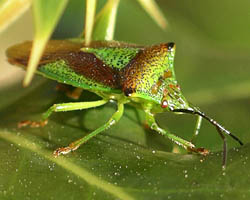
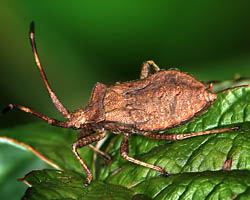
Shield Bug, Acanthasoma hamorrhoidale (left) brightly colored to warn predators of their bad defensive smells; females care for their young nymphs. Leaf-footed Bug, Coreus marginatus (right) suck plant juices and give off a horrible smell if handled. Photo credits: Velela and Richard Bartz
|
||
 |
 |
|
|
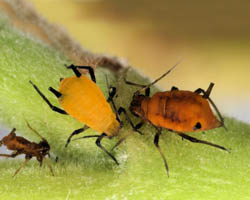
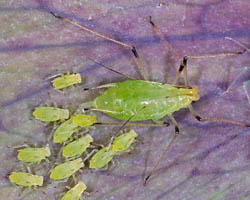
Aphids (right and left). So tiny that they can be blown on the wind for 100s of miles. They suck sugary juices from plants and are often defended by ants that milk them of their sweet liquids. Young aphids are born alive and in some seasons are all females produced without mating with a male. Photo credits: Sanjay Acharya and Michel Vuijlsteke
|
||
 |
 |
|
|
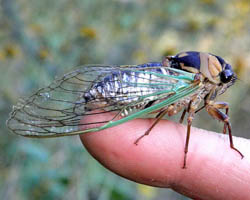
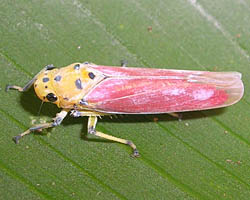
Cicadas (left) are large and suck plant juices, often from tree roots. The adults sing ear-splitting trills and ringing calls that are most often heard on warm afternoons and evenings. Leafhopper (right) are small bugs, some of which cause great damage to potatoes, apples, beans and clover by introducing disease when they suck the plant juices. Photo credit: Dany Pierard-Deviche and L. Shyamal
|
||
 |
 |
|
|
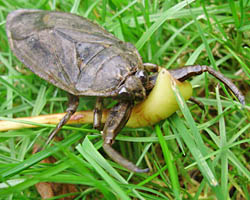
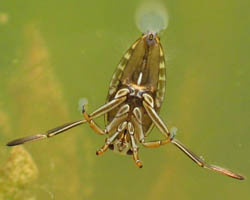
Lethocerus americanus water bug (left) lives in water and is large (up to 4 inches long); it eats other insects, salamanders and small fish in streams and ponds. Its bite can be painful. Notonecta glauca, Backswimmer (right) swims upsidedown, as if it was in a backstrock swimming competion. Photo credits: The High Fin Sperm Whale and Holger Gröschl
|
||
 |
 |
|
|
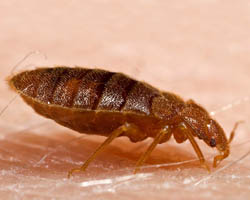
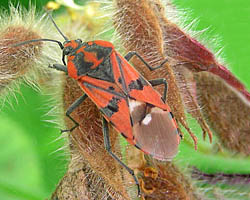
Cimex lectularius bed bug (left) is a flightless species that hides in mattresses and cracks in the wall to sneak out at night to painlessly suck blood from sleeping people. Milkweed bug (right) is one of the few insects that can tolerate the extremely poison sap of the milkweed plant. It uses this poison in its body to protect itself from birds and other predators, and its bright color advertises a warning. Photo credits: CDC and Jose Luis Cernadas Iglesias
|
||
 |
 |
|
|
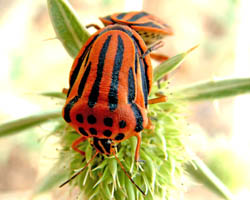
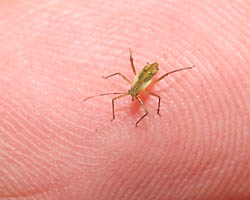
Unidentified true bugs. Making a meal of a plant (left) and showing how small some of these insects can be (right). Photo credits: Tobias Mercer and Heiko Wagner
|
||
Images from Wikimedia Commons and Dany Pierard-Deviche.
View Citation
Bibliographic details:
- Article: True Bug Gallery
- Author(s): Adam Dolezal, Page Baluch
- Publisher: Arizona State University School of Life Sciences Ask A Biologist
- Site name: ASU - Ask A Biologist
- Date published: October 6, 2010
- Date accessed: April 17, 2024
- Link: https://askabiologist.asu.edu/true-bug-gallery
APA Style
Adam Dolezal, Page Baluch. (2010, October 06). True Bug Gallery. ASU - Ask A Biologist. Retrieved April 17, 2024 from https://askabiologist.asu.edu/true-bug-gallery
Chicago Manual of Style
Adam Dolezal, Page Baluch. "True Bug Gallery". ASU - Ask A Biologist. 06 October, 2010. https://askabiologist.asu.edu/true-bug-gallery
Adam Dolezal, Page Baluch. "True Bug Gallery". ASU - Ask A Biologist. 06 Oct 2010. ASU - Ask A Biologist, Web. 17 Apr 2024. https://askabiologist.asu.edu/true-bug-gallery
MLA 2017 Style

Coloring Pages
and Worksheets

Puzzles
Be Part of
Ask A Biologist
By volunteering, or simply sending us feedback on the site. Scientists, teachers, writers, illustrators, and translators are all important to the program. If you are interested in helping with the website we have a Volunteers page to get the process started.
