

Read our stories
Listen and watch
Play our games
Enjoy our activities
Welcome to Ask A Biologist. This site has a large collection of biology learning materials that includes stories, games, activities, videos, and a podcast.
Read our stories
Listen and watch
Play our games
Enjoy our activities
Does being born a son or a daughter mean your reproductive success might be different? In some societies, it does.
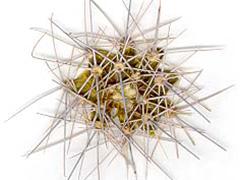
Tucked away inside steel-gray cabinets in the Life Sciences Building is a different kind of library known as the ASU herbarium. The stacks upon stacks of color-coded folders contain more than 210,000 plant specimens -- a kind of botanical history of Arizona and the world.
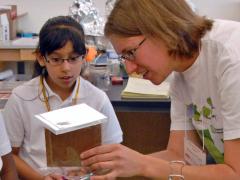

Building Your Own Ant Farm is a 2-part Ask A Biologist video with Dr. Biology and Rebecca Clark on how to build an ant farm with two recycled CD cases. Watch part two.

Can storytelling transform biology research? Join us for an engaging conversation with Kayla Burgher and Risa Schnebly, two visionary PhD students at Arizona State University.…
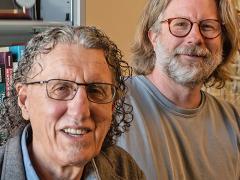
Even though we live in a modern world how we act and what we do many times is controlled by our Stone Age brain. This impacts our diet, friendships, love and more. Dr. Biology sits down with authors Doug Kenrick and David Lundberg-Kenrick to get the inside story…

Microbes: The Good, the Bad, The Ugly takes you on comic book journey inside the human body where there are both good and bad bacteria and viruses.
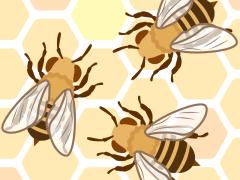
Take a trip with us today into the Bee Learning Lab. Train bees in your very own experiment and see how you can make them learn…
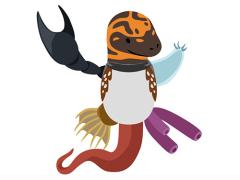
Dr. Frankenstein needs your help to learn about how the bodies of different animals work! Build your own creature from 3…

DNA is the key to life, so it's no wonder that we've been working to crack the code. With the tool CRISPR Cas9, we'…

Our genes control much of how we look and who we are. But do you really know how genetics work? Take a moment to gather some…


