

Listen and Watch
A Biology Podcast for Everyone
You have been reading about the biologists behind the Ask A Biologist website. Now you can listen to them in our popular biology podcast show. Dr. Biology has been speaking with many of the biologists that are discovering new worlds and exploring new frontiers in biology. There are over 100 episodes and we continue to add more interviews. Each show includes a full written transcript and content log. Be sure to subscribe using your streaming service of choice. The Ask A Biologist Podcast can be found on Apple Podcasts, Spotify, Amazon Music, Youtube, and most podcast apps.
Check out our YouTube channel!
If you missed it, we have our own YouTube channel where we have a large collection of videos that you can watch. We list some of them under our watch section on this website, but there are many more. Be sure to check them out and just like our podcast, don't forget to subscribe!
We have so many great podcasts with researchers, trainees, park rangers, and more. Take a peek below to listen in.
One Wormy World
Ask A Biologist Podcast, Vol. 84
Guest: Andrea Graham
Around 4,000 years ago, on the wind-swept island of St. Kilda, Scotland, people started creating a food storage of sorts. They moved a population of sheep to the island, likely as a backup food resource for when times were tough. Little did they know that their actions would affect 21st-century science. Today, rather than ending up as a meal, sheep from this isolated population are the subjects of research on immune function. Ecologist Andrea Graham takes Dr. Biology on a trip of exploration through the dangerous cliffs, windy conditions, and wormy world that the Soay sheep deal with on St
Cybertaxonomy
Ask A Biologist Podcast, Vol. 83
Guest: Kelly Miller
The race is on. It is one where biologists and citizen scientists are working as quickly as possible to find and identify all the species on Earth before some go extinct. It might not seem like an important race, but we learn from entomologist Kelly Miller that not knowing what species we are losing might be more important than we think. To speed up the search scientists are using traditional and newer tools that are part of the world of cybertaxonomy.
Time Traveling Paleoentomologist
Ask A Biologist Podcast, Vol. 82
Guest: Bruce Archibald
If you could travel back in time what would you find 50 million years ago? What was the climate like? Would you find the same plants? What animals were crawling, walking, and flying around? Paleoentomologist Bruce Archibald takes Dr. Biology back in time to explore the planet during the Eocene Epoch where things were a bit different than today – there was even a giant flying ant that would make anyone look twice.
Inner Space: The Final Frontier
Ask A Biologist Podcast, Vol. 81
Guest: Angela Goodacre, Doug Chandler
You hear that space is the final frontier, but could we have another frontier right here on Earth? The microscopic world offers a limitless opportunity to explore amazing places and life forms. You just need the right tool for the trip – a microscope. Guests Angela Goodacre and Doug Chandler have a conversation with Dr. Biology about the instruments that let us journey into inner space.

Rebooting the Immune System
Ask A Biologist Podcast, Vol. 80
Guest: Paul Turke
Remember your last paper cut, or the bad cold that had you coughing and blowing your nose? It was your immune system that was busy trying to make you better by battling the bacteria or virus that was attacking your body. How your immune system works is the discussion Dr. Biology has with pediatrician Paul Turke. They also talk about how our immune systems have to reboot to keep up with evolving bacteria and viruses.
Swarm Science
Ask A Biologist Podcast, Vol. 79
Guest: Arianne Cease
During a plague year, locusts can swarm over 20 percent of the world’s landmass, affecting one out of every 10 people on the planet. Sounds bad – right? Enter biologist Arianne Cease who has been studying why these insects swarm and how to control them. Dr. Biology learns about her work and an interesting research area called telecoupling.

Queen Switcharoo
Ask A Biologist Podcast, Vol. 78
Guest: Raghavendra Gadagkar
According to an old German proverb the animal that is the subject of this show was made by the devil. Dr. Biology gets a lesson about this devilish study subject from biologist Raghavendra Gadagkar. They talk about what he has learned from years of observing these misunderstood animals. There is even a surprise ending that we call the 'Queen Switcharoo'.

Science-Powered Games
Ask A Biologist Podcast, Vol. 77
Guest: David Mcconville
What is a media artist doing developing games based on large science data sets? It turns out he is looking into how the planet ticks and also what David McConville calls global weirding. Listen as Dr. Biology learns how a media artist makes his home in the world of science, biology, and and mountains of scientific data, which we call big data.
Tobacco Plant to the Rescue
Ask A Biologist Podcast, Vol. 76
Guest: Charlie Arntzen
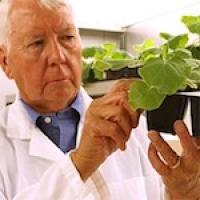
If you are a tobacco plant, you have a bad reputation. The link to cancer and other health related diseases is cause for any person to avoid you. But there is another side to this plant. Dr. Biology sits down with biologist Charlie Arntzen to talk about how tobacco plants are helping scientists produce treatments for viruses like Ebola.
Tales of Termites
Ask A Biologist Podcast, Vol. 75
Guest: Barbara Thorn
"Your home has termites" – is not something anyone wants to hear. But these insects are really important for our survival. Dr. Biology learns about these insects from entomologist, Barbara Thorn. It turns out that these critters are like tiny 'green machines' and one of the best recyclers for the planet.
Secret Life of the Natural History Museum
Ask A Biologist Podcast, Vol. 74
Guest: Richard Fortey
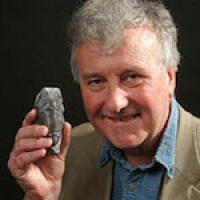
Natural history museums may not come to life as they do in a Hollywood movie, but they do have some amazing stories. They also have all kinds of cool stuff that many of us never get to see. Paleontologist Richard Fortey talks about the life and some of the treasures hidden behind locked doors at natural history museums that are also part of his book Dry Store Room No.1.
Putting the Touch into Biology
Ask A Biologist Podcast, Vol. 73
Guest: Ashleigh Gonzales
If you think of the instruments used to study and explore the world of biology it is clear that most are visual. So what if you cannot see? How would you understand the structure of – say a cell? Dr. Biology discusses a new tool for learning about biology with newly graduated student and biologist Ashleigh Gonzales.
Space Physiology
Ask A Biologist Podcast, Vol. 72
Guest: Scott Parazynski
Extreme environments can be found on Earth, in space, and in the depths of the ocean. Dr. Biology and physiologist, astronaut, and mountain climber Scott Parazynski sit down and talk about what life is like to explore these environments. So hold on to your seat as we blast off for a fun trip. Did we mention the Vomit Comet?
Zombie Ants
Ask A Biologist Podcast, Vol. 71
Guest: David Hughes
So you think zombies are only on television and in the movies, think again. Dr. Biology learns the details of a nasty fungus and something called the "death grip" from biologist David Hughes. It turns out there are real live, well maybe not live, zombies. The good news is this fungus attacks ants and not humans.
Learning from Darwin's Finches
Ask A Biologist Podcast, Vol. 70
Guest: Peter Grant, Rosemary Grant
What happens when you mix part Robinson Crusoe and Swiss Family Robinson with biology? You get an adventure that has filled many lifetimes (bird lifetimes). Dr. Biology had the opportunity to sit down with Peter and Rosemary Grant to talk about the more than 30 years they spent studying what have come to be called Darwin’s finches.

Food for Thought About GMOs
Ask A Biologist Podcast, Vol. 69
Guest: Kevin Folta
What is a genetically modified organism (GMO)? How do you make something that is a GMO? Are they safe? These are just a few of the things Dr. Biology discusses with biologist Kevin Folta. The two also talk about how and where you can find information about science that you can trust to be the most accurate.
Cute Colorful Poison Dart Frogs and Their Mimics
Ask A Biologist Podcast, Vol. 68
Guest: Molly Cummings
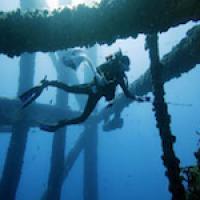
They might be colorful. They might be cute to some people. But don’t let that fool you. These bright-colored frogs are poisonous. Dr. Biology talks with biologist Molly Cummings to learn about her work with some frogs that advertise to predators to stay away and other frogs that take advantage of this signal by copying the colors of their poisonous cousins.
Looking into Lucy
Ask A Biologist Podcast, Vol. 67
Guest: Donald Johanson
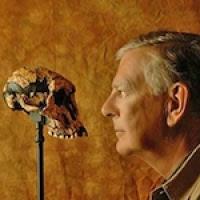
Looking into the past can be strange and exciting. To understand a past that goes back millions of years, we often depend on the stories told by fossils. Dr. Biology talks with anthropologist Donald Johanson about Lucy, a fossil of human ancestors that has taught us some interesting things about the human-like species that existed before us.

A Hiking Adventure
Ask A Biologist Podcast, Vol. 66
Guest: Liz Smith, Justin Olson
Not everyone has been on a hike and very few have hiked with a park ranger. Dr. Biology hikes South Mountain Park with not one but two park rangers. Park Rangers Liz Smith and Justin Olson are our guides for the 2.5 mile trip up Holbert Trail. This episode provides hiking tips and a preview of what treasures await those who hike this park.
Ant Life Part 2
Ask A Biologist Podcast, Vol. 65
Guest: Jennifer Fewell
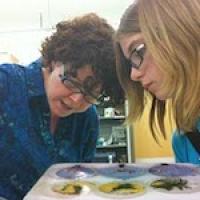
Wait - there's more! Dr. Biology and co-host Jane Rector continue their visit with Jennifer Fewell, a biologist who is exploring the world of social insects including ants. There is even some talk of how professional basketball teams could learn a thing or two from these six-legged insects. Not that we are saying there are tiny basketball games taking place inside ant colonies.
We have some great videos for you to watch. Find illustrated introductions to biology subjects, tours of research labs, tours of field sites, and more.
Your choice did not yield any results.
Be Part of
Ask A Biologist
By volunteering, or simply sending us feedback on the site. Scientists, teachers, writers, illustrators, and translators are all important to the program. If you are interested in helping with the website we have a Volunteers page to get the process started.
