
Submitted by
AllissaGrade level
8Answered by
Pooja Kher
Let's start by first answering the question "What is a yawn?" A yawn is a mostly involuntary action...while you can sometimes suppress a yawn, it’s very difficult to stop once it begins. Your jaw drops, and your eyes may squeeze shut as you take a deep breath. After a short pause, you exhale. Sometimes there’s a small gasp or sound, and your eyes might water. It happens the same way for people all over the world. Even babies in the womb yawn before they’re born.
Why do we yawn?
Yawning is something humans and animals both do. The mystery is that scientists are still figuring out why, and they’ve come up with a few strong theories. Brain Reset Hypothesis: One popular theory is that yawning helps wake up the brain. Just like hitting the refresh button on your computer when it lags, a yawn might give your brain a quick reset. When you yawn, the deep breath and stretch increase blood flow and may help trigger alertness by changing your heart rate or brain activity. This might explain why yawns happen when soon after we wake, or soon before we sleep… or during boring tasks that lower alertness. Yawning might help your body switch from “rest mode” to “focus mode,” giving your brain a boost of energy when you need it most.
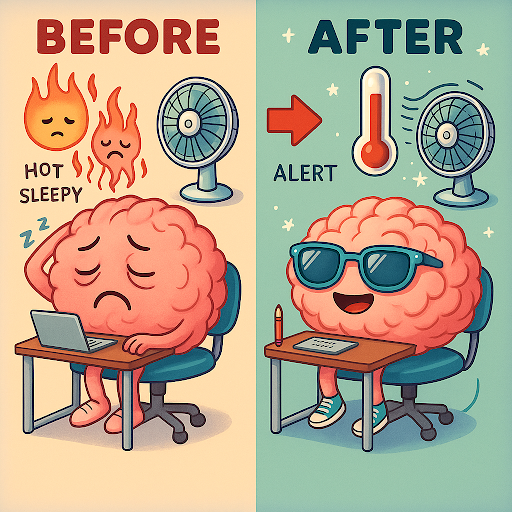
Cooling system hypothesis: Another hypothesis is that yawning helps cool the brain. The brain works best at a certain temperature, just like your phone or computer. If it overheats, yawning might help bring it back into the right range. Stretching your jaw, inhaling air, and even tearing up could release excess heat. One fun experiment had people watch yawning videos while holding warm or cool packs on their foreheads. Those with warm packs yawned more often than those with cold packs. Think of yawning like your brain’s air conditioner; it might kick on when things are getting a little too warm.
Why is yawning contagious?
Yawns are contagious! But not in a disease/sickness kind of way. Yawning is socially contagious, which means seeing, hearing, or even reading about someone yawning can make you do it too. (Are you yawning yet?) Scientists think this is linked to empathy: the ability to understand and share another person’s feelings. Brain scans show empathy-related regions light up when we see a yawn. This happens because of mirror neurons — brain cells that help you copy a behavior or action that someone else is doing. “Monkey see, monkey do.”
Our brains are wired to copy things we see in others, especially when we feel connected to them. You’re more likely to “catch” a yawn from friends and family than from strangers. Even dogs can catch yawns from their owners, but usually only once they’ve grown old enough to read human emotions. This supports the idea that emotional closeness plays a role in contagious yawning. In other words, the stronger the bond, the stronger the yawn response. Studies also found that people with higher psychopathic traits—meaning lower empathy and also those who score high in selfishness are less likely to catch a yawn.
Fun Fact: Ever notice your cat’s quick little yawn compared to a gorilla’s giant one? Turns out, bigger brains usually mean longer yawns. Yawns get longer the bigger your brain is… in line with the cooling system hypothesis, maybe bigger brains need more cooling.
Excessive yawning
Most of the time, yawning is harmless. Most people yawn up to 28 times a day, especially in the morning and evening. But excessive yawning, like yawning multiple times within 15 minutes without being tired or bored, might sometimes signal a medical issue. Conditions like multiple sclerosis, anxiety, or stroke can cause frequent yawning due to changes in body temperature or brain function.
Learning about yawning
Even with all these ideas, scientists still haven’t settled on a single explanation for why we yawn. Older ideas, like yawning to get more oxygen, have mostly been disproven. Today’s research focuses more on brain temperature, alertness, and social signals but there’s still no final answer. Yawning remains one of biology’s small, strange mysteries… and chances are, reading this made you do it too.
So.. have you yawned yet?
You may need to edit author's name to meet the style formats, which are in most cases "Last name, First name."
https://askabiologist.asu.edu/questions/why-do-we-yawn
Bibliographic details:
- Article: Why do we yawn?
- Author(s): Dr. Biology
- Publisher: Arizona State University School of Life Sciences Ask A Biologist
- Site name: ASU - Ask A Biologist
- Date published:
- Date accessed:
- Link: https://askabiologist.asu.edu/questions/why-do-we-yawn
APA Style
Dr. Biology. (). Why do we yawn?. ASU - Ask A Biologist. Retrieved from https://askabiologist.asu.edu/questions/why-do-we-yawn
American Psychological Association. For more info, see Purdue's OWL APA style guide
Chicago Manual of Style
Dr. Biology. "Why do we yawn?". ASU - Ask A Biologist. . https://askabiologist.asu.edu/questions/why-do-we-yawn
Dr. Biology. "Why do we yawn?". ASU - Ask A Biologist. . ASU - Ask A Biologist, Web. https://askabiologist.asu.edu/questions/why-do-we-yawn
For more info, see Purdue's Chicago style guide
MLA 2017 Style
Modern Language Association, 7th Ed. For more info, see Purdue's MLA style guide

Be Part of
Ask A Biologist
By volunteering, or simply sending us feedback on the site. Scientists, teachers, writers, illustrators, and translators are all important to the program. If you are interested in helping with the website we have a Volunteers page to get the process started.
