Plosable Articles

PLOSable Biology

Scientists are learning new things every day. They are also writing about their discoveries. In most cases they publish in science magazines called journals like the Public Library of Science (PLOS). In our PLOSable section you will find stories that will help you read and explore the articles written by scientists.

Now jump in and start exploring PLOSable - a place where firsthand science is only a mouse click away. If you're interested in diving even further into the world of the scientific article, check out our Anatomy of an Article story. We also have stories exploring articles in evolutionary medicine in our EvMed Edits section.

A Warmer Future for National Parks?

Written by: Michelle Sullivan

Are we robbing ourselves of our own natural treasures? A team of scientists is investigating how human-caused climate change is affecting U.S. National Parks.

A Win-Win with Wind

Written by: Melanie Sturm

When we think about using the natural power of the earth, like sun or wind, we don't usually think about how this might hurt animals. But researchers are finding that we can use sustainable energy while still taking care of our flying friends.

Aerial Ant Acrobatics

Written by: Andrew Burchill

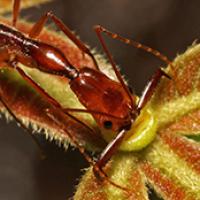
Trap-jaw ants come with spring-loaded jaws that can snap shut faster than any other animal's. But they may also use their jaws to catapult themselves through the air.

Always Judge a Grouse by its Cover

Written by: Veerta Singh

Whoever came up with the saying “don’t judge a book by its cover” probably never met the Chinese Grouse (Tetrastes sewerzowi). For the Chinese Grouse, judging a mate by its cover is actually the way to go.

Amoeba Families Stick Together

Written by: Ben Pirotte

Families are important to many animals, but are they also important to organisms made of just one cell? For amoebas, the ability to recognize relatives can make a world of difference.

Angiosperms: A Guide to World Domination

Written by: Connor Chato

Flowering plants, called angiosperms, are absolutely everywhere (even in Antarctica!). They are some of the most successful living things around. But what made them so successful?

Ants Can Feed Plants

Written by: Jessica Tay Ying Ling

Ants can move nutrients from one area to another in the forest. When ants build their homes inside a plant, does the food they carry and store also help the plant?

Are Plankton Ocean Super Stars?

Written by: Laura Lach

Plankton are ocean creatures so small we can't see them without a microscope, but just because they are small doesn't mean they don't play an important role in the ocean ecosystem.

Bacteria and Fungi Battle On Bat Skin

Written by: Nubia Erandi Maldonado Pérez

A dangerous fungus arrived in North America from Eurasia that has been killing millions of bats. Is it possible that bacteria that are already on the bats' skin are their best allies in fighting this fungus?

Bacteria in the Belly of the Bee

Written by: Tyler Quigley

Honeybees need the bacteria in their bellies to stay healthy, but the medicine we give them may be wiping them out.

Batty for Food

Written by: Meghan A. Murphy

We can learn a lot about animals by watching their behavior, but what about by looking at their surroundings? See what scientists can learn about bats based on the type of environment in which they live.

Benefits of Being Choosy

Written by: Malika Ihle

Being able to choose which people we interact with seems to affect how happy we are and how well we do our jobs. Is this true in other species? Learn how choosing a mate affects the success of zebra finches in making and raising young.
Also in: Français

Between Bat Brains

Written by: Elodie Batt

Bats are very social, and by reading their brains we can see them reacting in real time to the calls of other bats. When you have thousands of bats calling at the same time, how easily can they know who is who, or separate a friend from a stranger?

Birds of a Feather Change Together

Written by: Erica L. Lovett

The climate on our planet is changing, but what does this mean for living things, like plants and animals? Scientists investigated how birds respond to the changing climate.

Blurring the Line Between Plants and Animals

Written by: James Long

Imagine designing an organism that is part plant and part animal... you might be picturing some pretty funny combinations. Could designed plant-imals ever be a reality?

Body Fat May Trick Your Tastebuds

Written by: Ananya Sen

People come in all shapes and sizes… but could storing more body fat affect your sense of taste? Scientists try to answer this question by looking at how well taste buds work in lean and obese mice.

Brain Food

Written by: Rianna Mergens

Your mom tells you to eat all your vegetables for a reason, because she wants you to grow big and strong. She doesn't just want your body to grow strong. She wants your brain to grow strong too.

Brain-to-Brain Instant Messaging

Written by: Christopher Albin-Brooks

Reading minds may no longer be science fiction. Brain waves can be sent through the Internet to create an instant message in another person's mind.

Brains and Pain: Predicting Responses

Written by: Anna Xu

Placebos (fake medicine) have been used for years in research to learn about the effects of medications, called drugs. Some patients experience a strange “placebo effect,” where fake drugs work just as well as the real stuff. Scientists are now figuring out a way to predict a patient’s response to drugs, and how the placebo effect can mess with actual drug effects.

Bumblebees: Simple Creatures or Great Teachers?

Written by: Jonathan Jackson

Culture – it’s a word that we usually think of as connected with people. But many animals show signs of basic culture. Scientists are learning that even bumblebees possess the basic parts of culture too.

Anyone can use PLOS and PLOS Biology. You do not have to pay to read articles online or to download and print them. With PLOS and PLOS Biology you have first-hand access to the latest science.

Want to write a PLOSable story? Take a look at our Notes to Authors and Artists.

Learn how to read a scientific article

Be Part of
Ask A Biologist

By volunteering, or simply sending us feedback on the site. Scientists, teachers, writers, illustrators, and translators are all important to the program. If you are interested in helping with the website we have a Volunteers page to get the process started.

Donate icon  Contribute

Share this page