

From Bits to Brilliance
Written by: Pooja Kher
Illustrated by: Sabine Deviche
Illustrated by: Sabine Deviche
Computer science: the study of how computers work and how we can use them to solve problems. Computer science may involve writing instructions (called programs or code) that tell a computer what to do, as well as understanding how data is stored, processed, and shared.
Emergent: something new that shows up when smaller parts come together and work as a whole.
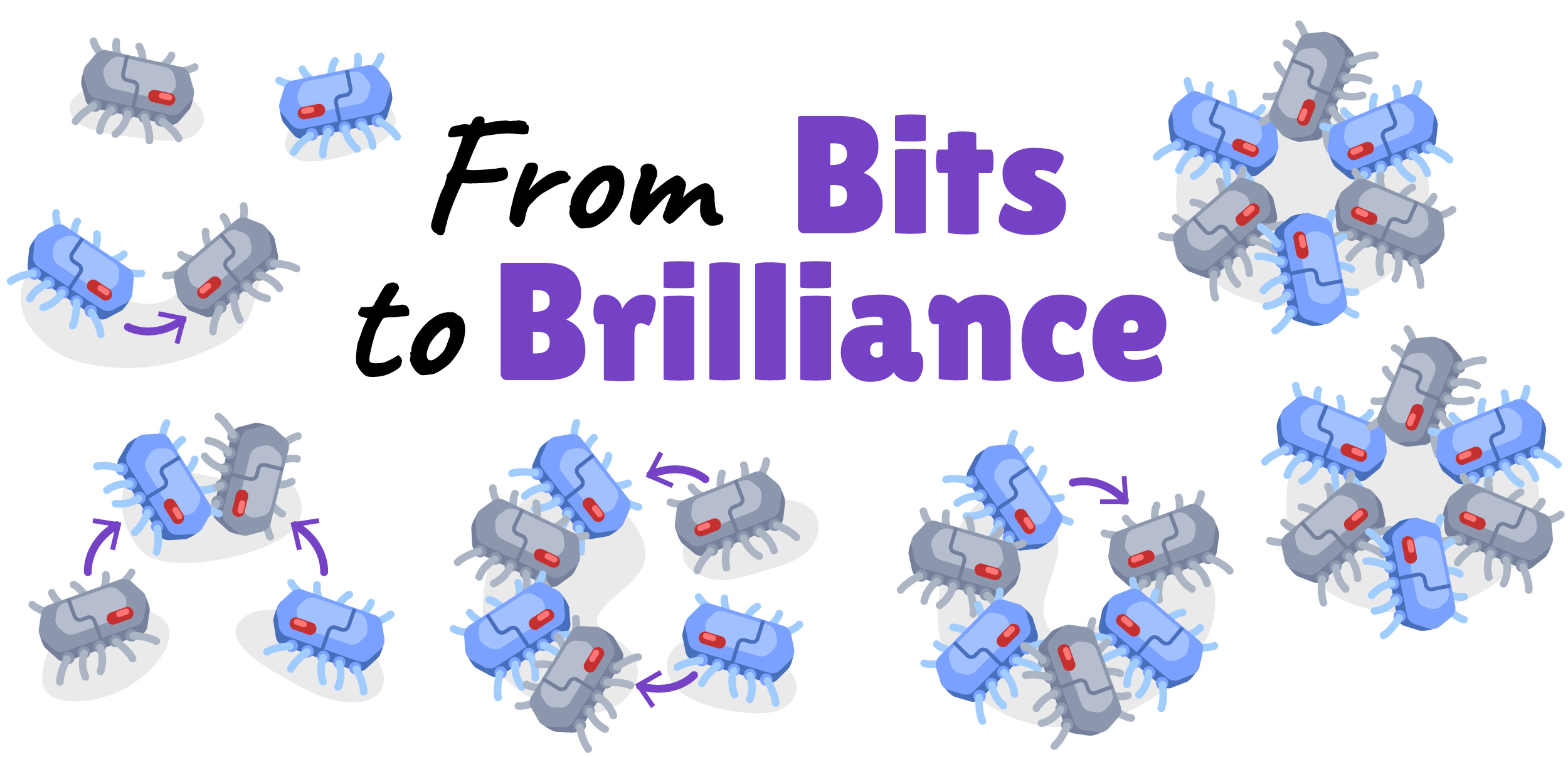
Tiny robots, about the size of hockey pucks, are scooting around on a table. They don’t have cameras, sensors, or fancy tools—just one simple rule: move closer to other robots when they’re nearby. At first, they seem to move randomly, like a messy dance. But then, something amazing happens. The robots start forming groups, almost like fish swimming in schools or ants building bridges. These robots show how small, simple actions can lead to big, organized patterns.

This is called emergent behavior, and it’s what Joshua Daymude, a computer scientist at Arizona State University, loves to study. Emergent behavior happens when a group—like birds, ants, robots, or even people—follows basic rules, and those small actions add up to create something big and amazing. Think of birds flying in a V-shape or ants working together to build tunnels. Nobody is in charge, but the group works perfectly together.
Joshua’s research connects nature to technology, and his fascination with emergent behavior began during his PhD at ASU under Andréa Richa. One of his most exciting projects involved studying how army ants build bridges out of their own bodies. When ants come across a big gap, they don’t wait for a leader to tell them what to do. Each ant follows a simple rule: if you’re near the edge, hold on and form a bridge. The ants behind them walk across, and together, they create a shortcut to get to the other side. Joshua worked on modeling this behavior using self-organizing particle systems (SOPS)—tiny robots programmed with simple rules to mimic the ants’ teamwork.
These robots, like the ants they’re modeled after, don’t have a leader. They just follow basic instructions. Even though each robot acts on its own, their actions combine to create remarkable results—they can form groups, make shapes, and solve problems together.
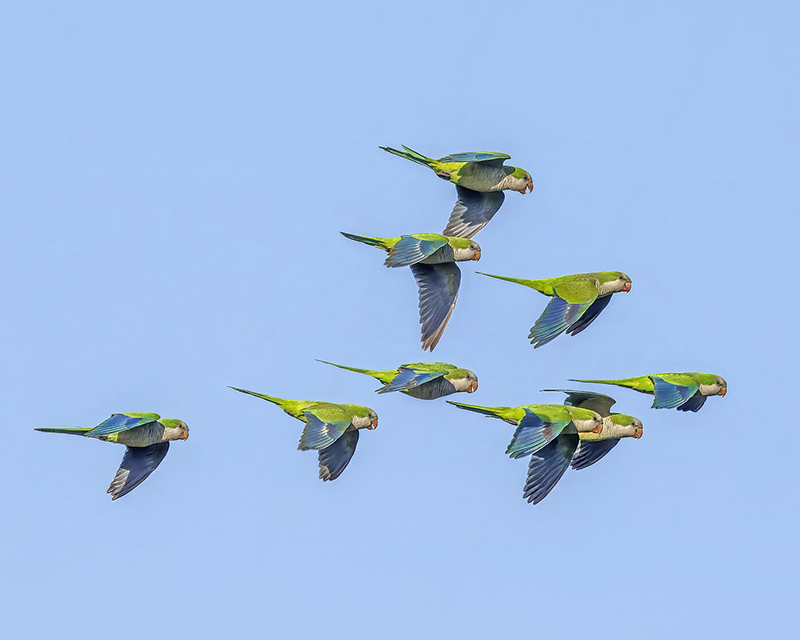
“In my work, I think about how big patterns—like a flock of birds flying together—come from small actions,” Joshua explains. “I want to know how each individual, like one bird or one robot, makes decisions based on what it sees and knows. When all those small decisions come together, they can create amazing group behaviors.”
Joshua’s research focuses on solving problems by starting small. Instead of looking at the big picture first, he studies the smallest pieces—like a single ant in a colony or one robot in a swarm. By figuring out how these individuals follow simple rules and interact with each other, he discovers how their actions create big patterns. This way of thinking called the “bottom-up” approach, is inspired by nature and can help with all kinds of problems, from designing smarter robots to helping people work together better.
One of Joshua’s important projects uses computer simulations to study how groups come together and break apart. Imagine a game where each player follows simple rules, like “stay close to people who agree with you” or “stay away from those who have different opinions.” Over time, groups of similar players form, while others end up on the outskirts, or “edges,” of the game. This is similar to social echo chambers in real life, where people only interact with others who share their views and ideas. By changing the rules a little, Joshua’s models show that small adjustments—like encouraging conversations between different groups—can help prevent these divisions from becoming too extreme.

Joshua didn’t always study ants and robots. He started by learning how computer systems work when lots of small parts have to communicate. But his big “aha moment” came when he realized these ideas also explain nature, like how ants, birds, and other creatures work together. This connection between computers and biology sparked his passion for solving puzzles in both fields.
Today, he applies his findings to a variety of challenges, including designing robots, understanding social dynamics, and exploring how small changes can create big impacts. Whether it’s figuring out the rules behind a bird’s flight formation or modeling how grassroots movements organize, his work shows the power of starting small to tackle big questions.
From Bits to Brilliance was created in collaboration with the Biodesign Institute at ASU.
Read more about: From Bits to Brilliance
You may need to edit author's name to meet the style formats, which are in most cases "Last name, First name."
https://askabiologist.asu.edu/explore/bits-to-brilliance
Bibliographic details:
- Article: From Bits to Brilliance
- Author(s): Pooja Kher
- Publisher: Arizona State University School of Life Sciences Ask A Biologist
- Site name: ASU - Ask A Biologist
- Date published:
- Date accessed:
- Link: https://askabiologist.asu.edu/explore/bits-to-brilliance
APA Style
Pooja Kher. (). From Bits to Brilliance. ASU - Ask A Biologist. Retrieved from https://askabiologist.asu.edu/explore/bits-to-brilliance
American Psychological Association. For more info, see Purdue's OWL APA style guide
Chicago Manual of Style
Pooja Kher. "From Bits to Brilliance". ASU - Ask A Biologist. . https://askabiologist.asu.edu/explore/bits-to-brilliance
Pooja Kher. "From Bits to Brilliance". ASU - Ask A Biologist. . ASU - Ask A Biologist, Web. https://askabiologist.asu.edu/explore/bits-to-brilliance
For more info, see Purdue's Chicago style guide
MLA 2017 Style
Modern Language Association, 7th Ed. For more info, see Purdue's MLA style guide

Emergent behavior is something scientists study that shows up in more places than you might expect. By looking at how groups, like this flock of starlings, follow simple rules but still create large, complex patterns, we can better understand how groups behave in general. Image by Walter Baxter via Wikimedia Commons.
Be Part of
Ask A Biologist
By volunteering, or simply sending us feedback on the site. Scientists, teachers, writers, illustrators, and translators are all important to the program. If you are interested in helping with the website we have a Volunteers page to get the process started.
