

Lasers light up memories
Written by: Pooja Kher
Behavioral conditioning: when you connect a specific action with a reward or a punishment, like training a dog to sit by giving it a treat.
Episodic memory: the type of memory that helps you remember specific events or experiences from your life, like a birthday party or a family vacation.
Fluorescent protein: a special type of protein (or material) that glows when exposed to light, often used in experiments to see cells under a microscope.
Foot shock: a mild electric shock given to the mice that is uncomfortable but not harmful, designed to create a fear response.
Freezing behavior: a type of response where an animal becomes very still and quiet, often when it feels scared or threatened.
Hippocampus: the part of human and other vertebrates' brains that helps with navigation and memory... more
Neuron: a special cell which is part of the nervous system. Neurons work together with other cells to pass chemical and electrical signals throughout the body... more
Optogenetics: optogenetics is a way scientists use light lasers to control and study specific brain cells to see how they affect behavior.
What's in the story?
Your brain has a library full of information, some people like to call this your memory palace. In this library, each memory gets stored as a unique and different book. When you experience something new, a specific group of neurons (or brain cells) becomes active, creating a new book. The book contains details about the memory and records all and any sounds, smells, or visuals that you felt a strong emotion about.

These "books" are what scientists call a memory engram—it is the physical trace of a memory in your brain. Later, when you remember this past memory, the same group of neurons get reactivated, allowing you to "reread" the book and feel some of the emotions from that exact same experience. Understanding how these engrams work helps us grasp how memories are formed, stored, and retrieved.
In the PLOS Biology article, "Optogenetic Activation of Hippocampal Neurons Triggers Memory Recall," scientists explore how certain brain cells in the hippocampus can affect how mice react when they remember something scary. This study helps us unlock the secrets of how different brain cells team up to create and recall memories, especially those that make us feel fear. Understanding this could help us learn more about our own memories and how we react to things that frighten us!
The brain’s librarian
These engrams are usually located in a part of the brain called the hippocampus. Your hippocampus is always organizing, storing or receiving different books or memories in your brain- your own personal librarian. All the books get made into memories inside a part of the hippocampus called the dentate gyrus; we call these episodic memories.
To study memory engrams, scientists often use mice because their brains share a lot of similarities with human brains, and we can change the way their bodies work and behave more easily. One technique that neuroscientists use is optogenetics, where they can shine different types of light lasers into specific parts of the dentate gyrus.
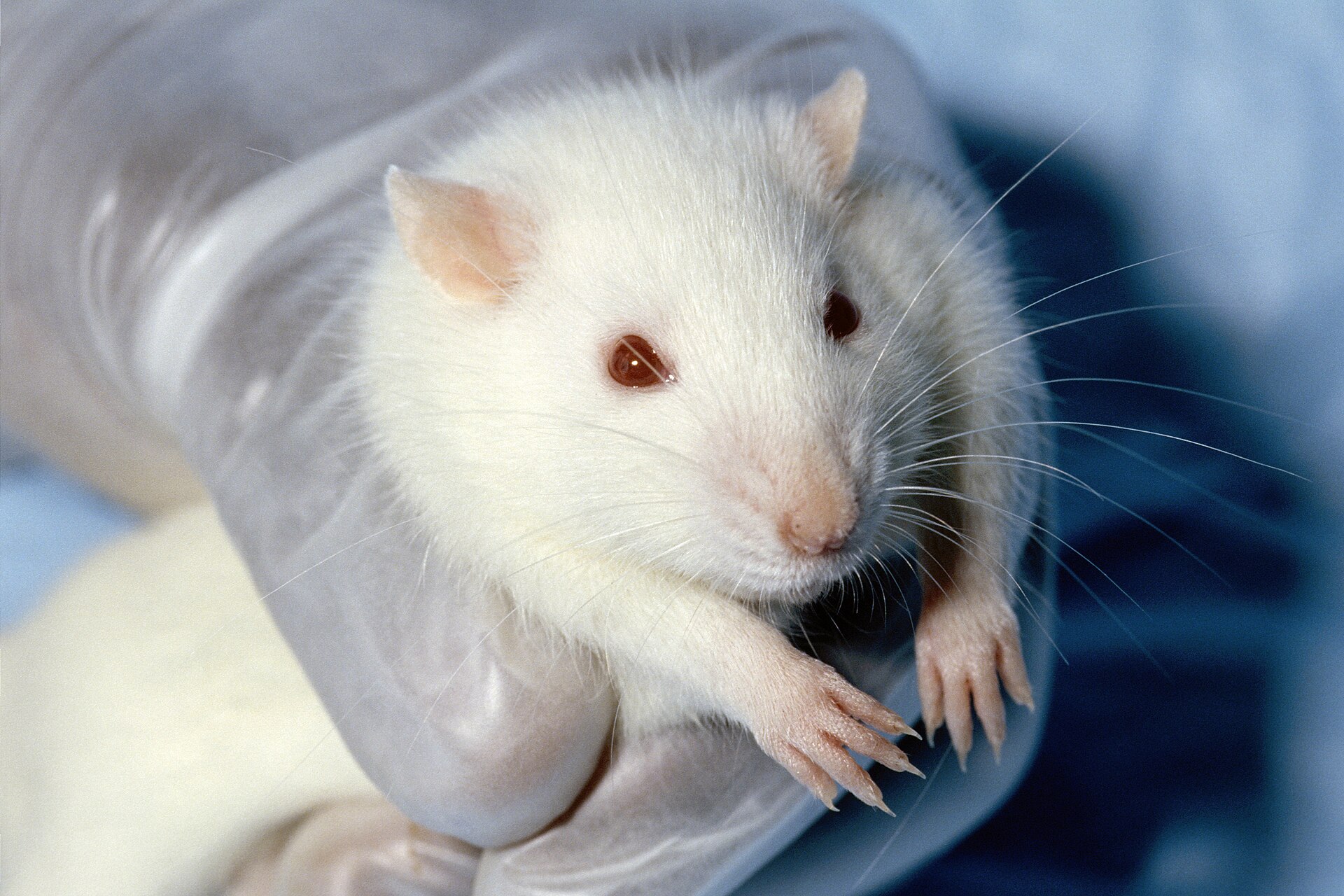
The neuroscientists had a big question: Can we turn on a memory like flipping a light switch? They wanted to see if they could shine a light on certain brain cells and make a memory pop back into someone’s mind, all the emotions and senses. They focused on a type of memory called "fear memory," which is how animals (including humans) remember to be afraid of things that might harm them. For example, if a mouse associates a loud noise with a shock, it will remember to be scared when it hears that noise again.
Glow in the dark brain cells
Think of neurons like tiny messengers in your brain that pass notes to each other all day long. The scientists wanted to see which messengers were talking to each other when a fear memory was formed. They inserted a harmless virus to add a special gene called Channelrhodopsin-2 (ChR2) into neurons in the dentate gyrus. This is a way to tag them when they’re active—like giving them a glowing name tag that says, “Hey, I was part of that specific memory!” Later, the scientists can shine a blue light on those tagged neurons to reactivate those messengers.
Training the mice at the school of fear
To teach the mice to be afraid, the scientists put them in a specific room, which we’ll call The Scary Room (Context B.) In this room, they played a loud sound while giving the mice a small foot shock. This association training is called fear conditioning, where the mice learn to associate the loud sound with something a little scary (the temporary shock). Every time this happened, the mice would freeze in place. Freezing is a natural fear instinct reaction in mice—like when you hold your breath because you’re scared. After the mice learned to be scared of the sound, the researchers moved them to a different room (let’s call it The Quiet Room). This room was neutral, meaning it didn’t remind them of the shock and there were no sounds being played. When they shined a blue light on these neurons, they watched to see if the mice would freeze. They did!
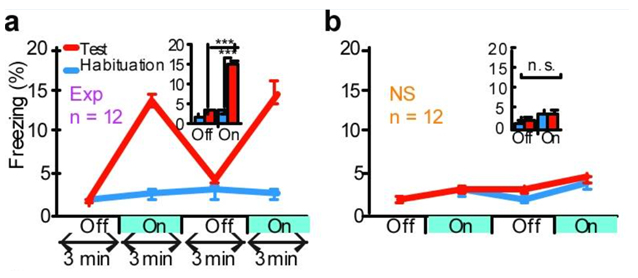
When the light was turned on, the mice that had learned to be afraid froze, showing that the light brought back their scary memory. The other mice that never got shocked (NS) didn’t freeze at all when their brains were activated by light in The Quiet Room. There was a group of mice that didn’t get the light-sensitive gene, even though they were shocked. These mice also didn’t freeze, proving the light only worked when it activated the correct neurons.
From Mice to Future Medicine
This research helps us understand how the brain works, how memories are stored. By figuring out which brain cells store memories, scientists may one day find ways to erase scary memories or help people remember good ones. This could be important for treating conditions like PTSD (post-traumatic stress disorder), chronic depression, or even Alzheimer’s. One day, maybe we can help people change or recover lost memories—just like flipping through a book in the brain’s library!
Additional images via Wikimedia Commons. Brain line art by JSCreative Lab AI Arts via Pixabay.
You may need to edit author's name to meet the style formats, which are in most cases "Last name, First name."
https://askabiologist.asu.edu/plosable/laser-memory
Bibliographic details:
- Article: Lasers light up memories
- Author(s): Pooja Kher
- Publisher: Arizona State University School of Life Sciences Ask A Biologist
- Site name: ASU - Ask A Biologist
- Date published:
- Date accessed:
- Link: https://askabiologist.asu.edu/plosable/laser-memory
APA Style
Pooja Kher. (). Lasers light up memories. ASU - Ask A Biologist. Retrieved from https://askabiologist.asu.edu/plosable/laser-memory
American Psychological Association. For more info, see Purdue's OWL APA style guide
Chicago Manual of Style
Pooja Kher. "Lasers light up memories". ASU - Ask A Biologist. . https://askabiologist.asu.edu/plosable/laser-memory
Pooja Kher. "Lasers light up memories". ASU - Ask A Biologist. . ASU - Ask A Biologist, Web. https://askabiologist.asu.edu/plosable/laser-memory
For more info, see Purdue's Chicago style guide
MLA 2017 Style
Modern Language Association, 7th Ed. For more info, see Purdue's MLA style guide

Scientists are trying to figure out how memories are stored and reactivated.
Be Part of
Ask A Biologist
By volunteering, or simply sending us feedback on the site. Scientists, teachers, writers, illustrators, and translators are all important to the program. If you are interested in helping with the website we have a Volunteers page to get the process started.
