

Listen and Watch
A Biology Podcast for Everyone
You have been reading about the biologists behind the Ask A Biologist website. Now you can listen to them in our popular biology podcast show. Dr. Biology has been speaking with many of the biologists that are discovering new worlds and exploring new frontiers in biology. There are over 100 episodes and we continue to add more interviews. Each show includes a full written transcript and content log. Be sure to subscribe using your streaming service of choice. The Ask A Biologist Podcast can be found on Apple Podcasts, Spotify, Amazon Music, Youtube, and most podcast apps.
Check out our YouTube channel!
If you missed it, we have our own YouTube channel where we have a large collection of videos that you can watch. We list some of them under our watch section on this website, but there are many more. Be sure to check them out and just like our podcast, don't forget to subscribe!
We have so many great podcasts with researchers, trainees, park rangers, and more. Take a peek below to listen in.

Living in Extreme Worlds
Ask A Biologist Podcast, Vol. 104
Guest: Mallika Sarma
Going where no one has gone before sounds exciting, but are we ready to go to Mars? Traveling long distances, and living on another planet is going to be a challenge. You could say an extreme challenge because of the conditions in which we will have to live. Dr. Biology learns a bit about the challenges from anthropologist, Mallika Sarma, who is looking into what it will take to travel to and live on distant planets. Do you have the right stuff?
Biology Explained by Cats
Ask A Biologist Podcast, Vol. 103
Guest: Fiona Naughton
Beyond viral cat videos and the millions of cute pictures of our feline friends found on various social media channels, these four-legged animals might help us to better understand science. At least my guest thinks they can give us some insights into the world of bile acids, digestion, cholesterol, and drug therapies. Listen in as Dr. Biology learns how computational biochemist Fiona Naughton's artistic side has introduced some fun and instructive insights using cute cat illustrations.
A Tasty Bite of Science
Ask A Biologist Podcast, Vol. 102
Guest: Christy Spackman
Dr. Biology takes a bite into the world of food science with scientist Christy Spackman from the School for the Future of Innovation in Society and the Herberger Institute for Design and the Arts. The two venture into the realms of taste, smell, and texture. There is talk of burgers, some of them impossible. The two also talk about how we have been working towards what Christy calls “making nothing”, which by itself is really something.
Exploring the Dark Side of the Earth
Ask A Biologist Podcast, Vol. 101
Guest: Bruce Strickrott
Dr. Biology is out of the studio again and this time with his shoes off and inside the tiny, but powerful submarine named Alvin. He’s there to talk with the chief pilot of Alvin, Bruce Strickrott, about what it is like to explore the deep ocean. Listen in as we explore the living world, including the one that remains mostly unknown and ready for the next generation of scientists to take their shoes off and dive into dark side of the Earth.

Superoxide, a Superhero or Supervillain?
Ask A Biologist Podcast, Vol. 100
Guest: Colleen Hansel
Diving deep into the ocean is likely the most extreme place someone can set out to collect data, but sometimes that is what scientists need to do. In this show, Dr. Biology finds himself on board the research ship Atlantis in the floating laboratory of Colleen Hansel who is teaming up with the deep sea submarine called Alvin to track down and capture an elusive molecule that might help us understand how corals are, or are not adjusting to the rising ocean temperature.

High Flying Science
Ask A Biologist Podcast, Vol. 99
Guest: Greg Asner
For hundreds of years, scientists have explored life on Earth with their feet firmly planted on the ground. Doing research was either in the laboratory, or out in the field. But in recent years exploring our planet has taken to the air. Dr. Biology gets to spend some time with ecologist Greg Asner to learn about his flying laboratory that is giving us a new view of our planet and new insights into many of our biomes.

Why We Get Sick
Ask A Biologist Podcast, Vol. 98
Guest: Randy Nesse
What can evolution teach us about getting sick and how do we make use of what we are learning? Dr. Biology gets over a cold while visiting with Randy Nesse, Founding Director of the ASU Center for Evolution & Medicine. The two talk about why we get sick and some of the amazing things our body can do to repair itself. All of this is part of the study and practice of evolutionary medicine.
Virus Quest
Ask A Biologist Podcast, Vol. 97
Guest: Arvind Varsani
One of the benefits of being a biologist can be travel. There are some researchers who travel the globe as part of their work. Arvind Varsani is a molecular virologist who studies viruses found around the world. Dr. Biology was able to catch Arvind between trips to talk about his work, including his research in the Antarctic and the mystery about some penguins that are missing their feathers.

Microbes Living Inside Us
Ask A Biologist Podcast, Vol. 96
Guest: Rosa Krajmalnik Brown
In this program we talk a lot about cells. In particular plant, animal, and microbial cells. But did you know there is a world of microbes that make their home inside and on our bodies? Before you start to worry, you need to know most of these microbes are important for us to live. In fact, without them we would not be here. This tiny world is the focus of Rosa Krajmalnik-Brown’s research. It spans the microbes that live with us and those that are helping us clean up our environment.
History, Rabbits, and a Deadly Virus
Ask A Biologist Podcast, Vol. 95
Guest: Grant McFadden
This is the story of wild rabbits, humans, and a virus that might lead to a treatment for cancer. It is also a lesson about learning from history and how a virus that is deadly to some rabbits could become a new cancer-fighting tool for humans. Twice humans moved wild rabbits from Europe to other parts of the world with dramatic consequences. In this episode, Dr. Biology has the opportunity to learn about the myxoma virus, its history, and the work of virologist Grant McFadden.

Who Do You Trust?
Ask A Biologist Podcast, Vol. 94
Guest: Joe Palca
The evening news, your local paper, online websites, blogs, twitter, Facebook, and yes podcasts all are communicating the latest science news. In this mix of messages are often conflicting stories about what is good and bad for you. It also seems that every other day there is a cure for cancer or some other disease. With all this messaging, who do you trust? Dr. Biology has a chance to talk with Joe Palca, a longtime science correspondent, about who we should trust and science communication.

Are Your Cells Cooperating or Cheating?
Ask A Biologist Podcast, Vol. 93
Guest: Athena Aktipis
Cooperation is something that humans and animals are known to do. It turns out that the 30 trillion cells in our body also need to cooperate. Like some humans, there are cells that are cheaters when it comes to cooperation. They do not do their share of the work and cause a lot of other problems. These are cancer cells. Cooperation theorist Athena Aktipis talks with Dr. Biology about her research and how it might help us learn more about cancer cells.

Life 3.0
Ask A Biologist Podcast, Vol. 92
Guest: Max Tegmark
Life in the year 2050, what will it look like? Will it be the age of intelligent computers? Could this happen even sooner? Physicist and author Max Tegmark talks about the future of artificial intelligence and how it might impact biological life on this planet. Dr. Biology learns about the future of smart computers. Will they become too smart for humankind? What precautions should we put in place to secure our place on Earth and our future?

Hacking Nature
Ask A Biologist Podcast, Vol. 91
Guest: Klaus Lackner
Hacking is a word that is often tied to something bad. However, there are times when hacking can be for something good. Think of it as a tool that can be put to use for good or bad. We also think of hacking as something only done with computers, but can we hack other things? Dr. Biology has the opportunity to sit down with scientist Klaus Lackner to talk about how he is hacking the environment in order to pull carbon dioxide (CO2) out of the air. If he succeeds, it could help reduce CO2 in the atmosphere and redirect it towards better uses.
Drawn to Bones
Ask A Biologist Podcast, Vol. 90
Guest: Catyana Falsetti
Television portrays the lives and work of forensic artists, but what is it like to really be a forensic artist? Are the tools you see on the big and little screen really used by the people who recreate the face of someone when there might only be a skull or parts of a scull to use as a starting point. Dr. Biology visits with forensic artist and author Catyana Falsetti to learn the answers to these questions and a lot more.
Why Is Life The Way It Is?
Ask A Biologist Podcast, Vol. 89
Guest: Nick Lane
What would life be like on other planets? This is just one of many questions that Biochemist and author Nick Lane talks about while visiting with Dr. Biology. Listen in as Nick explores not only life on our Earth, but also what it might be like on other planets. Nick also reads from his book, The Vital Question, and weighs in on the question of viruses - are they living or non-living?
Monster DNA
Ask A Biologist Podcast, Vol. 88
Guest: Melissa Wilson
In the tiny world of DNA, we might call genomes monsters. These huge sets of information include all the codes for all the genes present in an organism. From genomes, we can learn about the traits, diseases, and evolution of a species, and that’s just a start. What might such a monster set of data do for us if it was about our very own North American monster – the Gila monster? Computational biologist Melissa Wilson tells Dr. Biology about the Gila monster, the life-saving venom in its saliva, and what we might learn from the monster genome.

Ocean Winds and Climate
Ask A Biologist Podcast, Vol. 87
Guest: Joellen Russell
Did you know the westerly winds in the Southern Ocean have been helping to keep our planet livable? Yes, they have been responsible for soaking up half of the human-made carbon dioxide (CO2) along with a whole lot of excess heat. Dr. Biology has the opportunity to talk with geoscientist Joellen Russell about the research she and a group of scientists have been doing in the southern hemisphere that tells us how important these winds and the oceans are for regulating the temperature of the planet.

Skeleton Secrets
Ask A Biologist Podcast, Vol. 86
Guest: Tony Falsetti
Dead men tell no tales, but their bones can. It just takes a particular kind of scientist to read the clues that tell the story. Dr. Biology sits down with guest Tony Falsetti, a forensic anthropologist who knows his way around a skeleton. They talk about the role of forensic anthropology and some of the mysteries of history Tony has helped to solve.
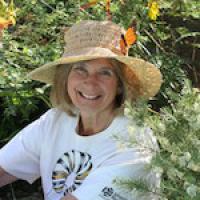
Insect Infatuation
Ask A Biologist Podcast, Vol. 85
Guest: Gail Morris
These fluttering icons of North America are a favorite of many people across the world, but they may be having some population problems. Don’t worry though, there are ways you can help. Conservation specialist Gail Morris talks with our student guest host Kayna Lantz about these colorful insects, their identification, migration, and the many groups that are working to better understand them.
We have some great videos for you to watch. Find illustrated introductions to biology subjects, tours of research labs, tours of field sites, and more.
Your choice did not yield any results.

Be Part of
Ask A Biologist
By volunteering, or simply sending us feedback on the site. Scientists, teachers, writers, illustrators, and translators are all important to the program. If you are interested in helping with the website we have a Volunteers page to get the process started.
