





Organ Swap
show/hide words to know
What’s in the Story?

Frankenstein's monster was made of many different parts, but real world transplants are performed to save lives, not make scary-looking characters.
Some people think we will be like Iron Man or Darth Vader in the future: half man, half machine. We still have a ways to go before metal can fully replace body parts. In the mean time, scientists are working on an alternative: flesh and blood transplants. A transplant is what we call it when doctors take a body part from one person and give it to another person, kind of like Frankenstein except not so scary-looking. People often get heart transplants, liver transplants and even lung transplants. In the PLOS Biology article, “Transplant Biology at a Crossroads,” scientists try to figure out the easiest and safest way to do hand and face transplants.
Risky Business
Transplants can be dangerous because the body will try to attack the transplanted organ if it doesn’t recognize it. Imagine the body as a heavily defended castle, and the only way to be accepted inside is if you have a password. The password is a special set of biological factors that say whether the transplant is similar enough to be accepted by the body.
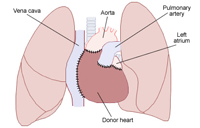
Even hearts can be transplanted. Wikimedia Commons- D Dinneen.
Viruses like the flu are very different from the body and give the wrong password when they enter. This causes the body protector, the immune system, to send out little soldiers called antibodies to attack the threat. Usually, this is a very important process because it is how our bodies fight off infections and keep us healthy. However, if the transplanted organ doesn’t match the body enough to have the right password, it is seen as a threat and it is attacked.
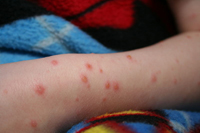
You may be familiar with viruses like the chicken pox. When medicine shuts down the immune system, viruses can attack much easier. Wikimedia Commons- JonnyMcCullagh
The best way to make sure a transplant matches and has the right password is to get the transplant from a family member. Have you ever noticed how you look more like your own parents than your friends' parents? The factors that contribute to the password work the same way. Unfortunately, we don’t have two of every organ, so we can’t always give one to a family member and still live. If the person in need can’t get the organ from a family member, doctors can try to use medicine to keep the immune system from attacking dissimilar transplants.
The medicine works by keeping the immune system from recognizing whether it is given the right or the wrong password by newcomers. This is a dangerous thing to do because while the transplants are not attacked anymore, our bodies also avoid attacking harmful viruses and bacteria. This makes it harder to keep the people with transplants from becoming sick. In addition, the medicine is so strong and toxic that it can damage normal organs.
What Makes Hands and Faces so Hard to Transplant?
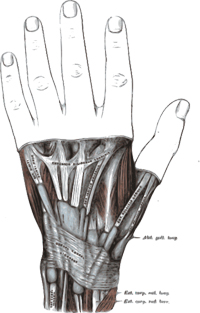
The many parts of the hand each need a sort of password or they will be attacked by the body's immune system.
The scientists in the article examined hands and faces because those are the some of the hardest body parts to transplant. That is because hands and faces have many different parts and muscles that allow them to function. When you think of an organ like the liver or kidney, doctors only have to worry about giving the immune system one correct password. The face has lots of muscles, nerves, and cartilage. In the hand there are bones, tendons, skin and many other things. When transplanted, all of those parts need to have the right password to keep the body from attacking the transplant.
Because of how hard it is to transplant hands and faces, the only way doctors can make it work is to have people who receive transplants take medicine for the rest of their lives. Obviously this is not the best solution because of how risky it is. Viruses and bacteria can enter the body much easier, and the medicine does not work perfectly. One woman who had a partial face transplant had many infections because her immune system wasn’t working properly. When that happened, the immune system went overboard and started attacking everything, including the transplant.
Solutions, Anyone?
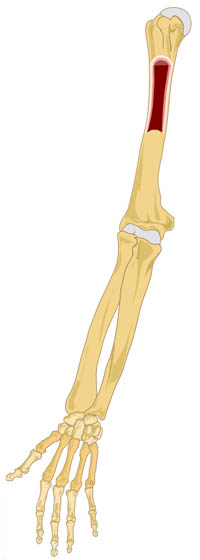
Scientists are using bone marrow to help people survive after receiving a transplant.
Doctors and scientists are now focusing on lessening the bad side affects of the medicine given to transplant patients, or getting rid of the medicine completely. One strategy is to use bone marrow instead of the medicine. Bone marrow is the material that fills the inside of your bones and produces blood cells and cells of your immune system. When someone receives a transplant, doctors also donate bone marrow from the transplant donor to the recipient. The marrow helps tell the immune system that the transplant is good and should not be attacked. This new technique has worked a few times, but scientists are still trying to work out the kinks.
Another strategy is to make more immune system soldiers, called regulatory immune cells, to protect the transplant from the body. That way the immune system can continue to recognize correct and incorrect passwords without damaging the transplant. Unfortunately, this research is very new and it will take a long time before it can be regularly used.
If any of the new strategies do work it will be a huge discovery for transplant biology. That means we want our best and brightest scientists working on a solution. Work hard in school, and maybe one day you will be one of the scientists doing your best to find an answer.
Additional images public domain on Wikimedia Commons.
View Citation
Bibliographic details:
- Article: Organ Swap
- Author(s): Lindsey O'Connell
- Publisher: Arizona State University School of Life Sciences Ask A Biologist
- Site name: ASU - Ask A Biologist
- Date published: January 8, 2012
- Date accessed: April 17, 2024
- Link: https://askabiologist.asu.edu/plosable/organ-swap
APA Style
Lindsey O'Connell. (2012, January 08). Organ Swap. ASU - Ask A Biologist. Retrieved April 17, 2024 from https://askabiologist.asu.edu/plosable/organ-swap
Chicago Manual of Style
Lindsey O'Connell. "Organ Swap". ASU - Ask A Biologist. 08 January, 2012. https://askabiologist.asu.edu/plosable/organ-swap
Lindsey O'Connell. "Organ Swap". ASU - Ask A Biologist. 08 Jan 2012. ASU - Ask A Biologist, Web. 17 Apr 2024. https://askabiologist.asu.edu/plosable/organ-swap
MLA 2017 Style
Be Part of
Ask A Biologist
By volunteering, or simply sending us feedback on the site. Scientists, teachers, writers, illustrators, and translators are all important to the program. If you are interested in helping with the website we have a Volunteers page to get the process started.
