

Listen and Watch
A Biology Podcast for Everyone
You have been reading about the biologists behind the Ask A Biologist website. Now you can listen to them in our popular biology podcast show. Dr. Biology has been speaking with many of the biologists that are discovering new worlds and exploring new frontiers in biology. There are over 100 episodes and we continue to add more interviews. Each show includes a full written transcript and content log. Be sure to subscribe using your streaming service of choice. The Ask A Biologist Podcast can be found on Apple Podcasts, Spotify, Amazon Music, Youtube, and most podcast apps.
Check out our YouTube channel!
If you missed it, we have our own YouTube channel where we have a large collection of videos that you can watch. We list some of them under our watch section on this website, but there are many more. Be sure to check them out and just like our podcast, don't forget to subscribe!
We have so many great podcasts with researchers, trainees, park rangers, and more. Take a peek below to listen in.

The Science of Learning Science - Why It Can Feel Hard (and What Helps)
Ask A Biologist Podcast, Vol. 144
Guest: Katelyn Cooper
From the fear of failure to the pressure of feeling like you don’t belong — what really gets in the way of success, and what can help students push through it?
In this episode, Dr. Biology talks with Katelyn Cooper from Arizona State University School of Life Sciences about the powerful connection between mental health and learning science.
You’ll hear why making mistakes might actually be one of the best ways to learn, how labels like “I’m not a science person” can hold us back, and why even professional scientists struggle more than you might think. If
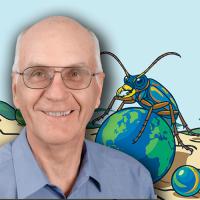
Fast Insects, Smart Science: Tiger Beetles Rule
Ask A Biologist Podcast, Vol. 143
Guest: David Peason
Tune in and get turned on to the world of tiger beetles! Dr. Biology chats with biologist David Pearson about these colorful sprinters that are not only fun to watch but also important “bioindicators” that help scientists understand the health of habitats. You’ll discover how tiger beetles inspire new designs through biomimicry, and why these tiny speedsters now have their very own celebration—World Tiger Beetle Day, November 11.
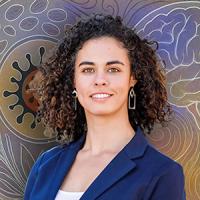
Sneezes, Swelling, and Smart Defenses: The Science of Allergies
Ask A Biologist Podcast, Vol. 142
Guest: Esther Borges Florsheim
Why do peanuts, pollen, or pet dander make some of us sneeze or swell up—but not others? In this episode, Dr. Biology talks with immunologist Esther Borges Florsheim from Arizona State University to explore how allergies start, why they’re becoming more common, and what’s really going on when your immune system sounds the alarm.
From sniffles to “no peanuts, please,” get ready to learn how your body protects you—and sometimes overreacts—in surprising ways
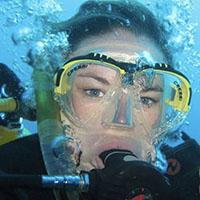
Coral Reef Checkup
Ask A Biologist Podcast, Vol. 141
Guest: Liza Roger
Coral reefs may look like colorful rocks, but they’re living animals that support entire ocean ecosystems. In this episode, Dr. Biology chats with professor Liza Roger, whose lab at Arizona at Arizona State University is home to corals, sea anemones, and some unusual upside-down jellyfish. Together, they explore the secrets of coral “superpowers,” the science of bleaching, and how tiny-scale medicines might help reefs fight stress. From the desert to the ocean, Roger’s research is uncovering creative ways to give corals a checkup—and maybe even a future.
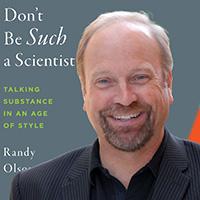
Biology, Books, and Movie Magic
Ask A Biologist Podcast, Vol. 140
Guest: Randy Olson
On this podcast, we like to explore how science meets the public. In this episode, we examine the art of communication, with biologist, author, and filmmaker Randy Olson. Dr. Biology learns how Olson uses humor and creativity as powerful tools. Inspired by platforms like The Daily Show, Randy's film "Sizzle" tackles global warming with a comedic flair. Listen as he shares invaluable advice for aspiring biologists and filmmakers, emphasizing the importance of passion and motivation. Whether you’re curious about effective science communication or seeking inspiration for your career, Randy’s
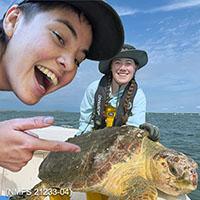
Next Gen Scientists
Ask A Biologist Podcast, Vol. 139
Guest: Kayla Berger and Risa Schnebly
Can storytelling transform biology research? Join us for an engaging conversation with Kayla Burgher and Risa Schnebly, two visionary PhD students at Arizona State University. Kayla shares her research in the fishing community to protect endangered marine megafauna like sea turtles and sharks. Meanwhile, Risa delves into the emotional side of conservation and the impact of extinction. Through an interdisciplinary approach, she combines history, personal narratives, and interviews to shed light on this often-overlooked aspect of conservation. We also talk about their exciting
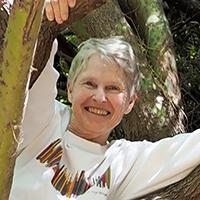
Bringing Biodiversity to the City
Ask A Biologist Podcast, Vol. 138
Guest: Julie Stromberg
Can a transformed 4-acre former citrus orchard become a vibrant urban wildlife sanctuary? Dr. Biology is out of the studio to explore Julie Stromberg's remarkable riparian garden. Julie, a plant ecologist and emeritus professor at Arizona State University, shares her motivations and the vital ecological benefits of creating such green spaces in urban areas. Hear the story behind her efforts in sustainable agriculture that are preserving biodiversity right in the heart of the city.
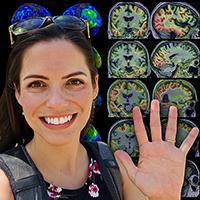
Charting the Mysteries of the Mind - Unraveling Alzheimer's and Dementia
Ask A Biologist Podcast, Vol. 137
Guest: Kimberly Olney
What happens when our brain fails us? As Dr. Biology, my work has never been involved with diseases that affect the mind, but I do have a personal experience with the shadowy realm of Alzheimer's and other dementias. My mother battled against this relentless adversary and I am not alone. Many people are dealing with loved ones facing one of these diseases. For this episode, I've invited bioinformatics scientist, Kimberly Olney from the Mayo Clinic, to peek into the complexities of the brain and these diseases. This episode is a brief voyage into the brain's amazing
From Cicadas to Centrifuges - The Frugal Science Revolution
Ask A Biologist Podcast, Vol. 136
Guest: Saad Bhamla
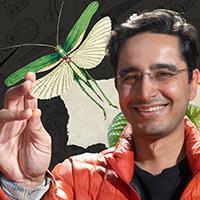
Embark on a journey through the intricate dance of nature and innovation as we welcome Saad Bhamla, a scientist at the forefront of biological engineering. Your curiosity will be rewarded as you and Dr. Biology learn about some of the smallest organisms that have sophisticated mechanisms that might help us solve our own challenges. Imagine the immense power hidden within a cicada's waste jet or the swift knot-escaping antics of a California blackworm—some might think of them as quirks of evolution, but others see them as blueprints for the future of design and technology. Our

In the Swarm's Shadow - Locust Science
Ask A Biologist Podcast, Vol. 135
Guest: Rick Overson and Mira Word Ries
Embark on a journey through the buzzing world of grasshoppers and locusts with Dr. Biology. In this episode, biologists Rick Overson and Mira Word Ries, from the Global Locust Initiative at Arizona State University dig into the world of these insects. The three delve into the methods of swarm prevention, from the intriguing "doughnut diet" that influences migratory behavior to the critical role of soil and crop management in making fields less welcoming to these insects. Rick and Mira bring to light the importance of global cooperation and the need for a unified attack against locust

Capturing Curious Minds: communicating complex science
Ask A Biologist Podcast, Vol. 134
Guest: James Gorman
Have you ever wondered how complex science jargon is translated into a story that captivates and educates? We've got you covered! Dr. Biology chats with James Gorman, a veteran science reporter from the New York Times, we peel back the layers of science communication, revealing how to distill complex concepts into engaging narratives. Get ready to discover the tightrope walk between simplification and scientific accuracy—a balance crucial for sparking curiosity without sacrificing the research's core. The two also talk about the best way to evaluate the trustworthiness of a science
Monkey Tales - Learning About Stress
Ask A Biologist Podcast, Vol. 133
Guest: Noah Snyder-Mackler
Dive into the behavior and physiology of two different primate species that are helping biologists explore the science of stress, aging, and immunity. Dr. Biology sits down with scientist Noah Snyder-Mackler from Arizona State University to talk about some rhesus macaques living in a seemly tropical paradise and the geladas that live high in the Ethiopian mountains. Discover how these monkeys, their experiences, and their environment might illuminate the path to improving our physiological resilience

Guardian of the Wild - A Veterinarian's Story
Ask A Biologist Podcast, Vol. 132
Guest: Sara Wyckoff
In a world where animals, humans, and the environment are forever linked, the health of wildlife is a cornerstone for the well-being of all. In this episode, we embark on an extraordinary journey with Sara Wyckoff, a wildlife veterinarian from the Texas Parks and Wildlife Department and a proud ASU alumna. Listen in and learn about her story and evolution from a hopeful wildlife biologist to a passionate wildlife veterinarian, underscoring the perseverance and dedication required to merge a love for the wild with the rigors of veterinary science.

Secrets of the Honeybee
Ask A Biologist Podcast, Vol. 131
Guest: Robert Page
Robert Page's journey is as captivating as the creatures he studies. From his early fascination with entomology to his experiences in the Vietnam War and his parallel passion for photography, his journey is a rich tapestry of experiences. We chat about the contributions he has made to our understanding of honeybees and his books including his newest book The Art of The Bee. Tune in and join us in celebrating the incredible role these insects play in our ecosystem and the biologist who has dedicated his life to studying them.
The Big Leap
Ask A Biologist Podcast, Vol. 130
Guest: William Ratcliff
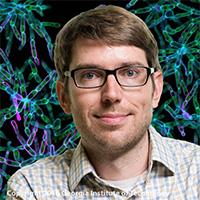
Have you ever wondered how evolution operates at a cellular level? Dr. Biology has a conversation with evolutionary biologist William Ratcliff in an episode that investigates the process of how single cell mutations can make the leap to coordinated groups of cells and ultimately to complex multicellular organisms. And we are learning all of this from a simple selection experiment involving yeast. Listen in and learn more about this long-running experiment that is giving us an idea of how single cells made the leap to multicell organisms.

Zoo Animal Fun, Games, and Wellbeing
Ask A Biologist Podcast, Vol. 129
Guest: Danielle Wong
Imagine a world where animals have the capacity to show their natural behaviors and even engineer their own environments. For this episode, we're thrilled to have Danielle Wong, the Behavioral Enrichment and Animal Welfare Coordinator at the Phoenix Zoo, who enlightens us about the importance of animal enrichment. From Chutti, the playful one-horn rhino, to Cape porcupines and birds, we're taking a deep look into how play promotes skill development, physical fitness, and stress relief among animals. Danielle also shares how zoos work together to create enriching activities and
Adventures of a Zoo Veterinarian
Ask A Biologist Podcast, Vol. 128
Guest:
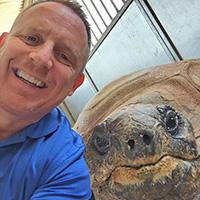
Imagine a day at work where your clients range from tiny reptiles to massive elephants, each with their own unique health needs. That's a regular day for our guest in today's episode, Dr. Gary West, the Senior Vice President of Animal Health and Living Collections at the Arizona Center for Nature Conservation. He talks with Dr. Biology about their team of dedicated professionals that not only ensures the well-being of over 3,000 animals at the Phoenix Zoo but also plays a key role in global conservation efforts. The tales of their daily challenges and the innovative solutions they

Chronicles of a Zookeeper
Ask A Biologist Podcast, Vol. 127
Guest:
Welcome to an exciting journey that takes you through the wild and fascinating world of zoos. Our guest for this episode is none other than Bert Castro, the President and Chief Exective Officer of the Arizona Center for Nature Conservation. Bert's storied career, beginning as a volunteer zookeeper at the Tulsa Zoo in 1985 to CEO of the Phoenix Zoo, has given him a wealth of knowledge and experiences which he shares with Dr. Biology. We explore the importance of zoos, and the vital role they play in research and conservation, and discuss the intricacies of running a modern zoo. Can you
An A.I. Conversation
Ask A Biologist Podcast, Vol. 126
Guest: Mina Johnson-Glenberg
Two AI bots meet in a coffee shop. This might sound like the start of a joke, but is it a joke? Today artificial intelligence (AI) is a popular topic. With new tools popping up daily it appears we are at the beginning of a brave new world. Some say the world will be amazing and others have dark predictions of human doom. Dr. Biology sits down with cognitive psychologist Mina Johnson-Glenberg to talk about A.I. and if we can really call it intelligent. But first, we need to listen in on that coffee shop conversation.
Breathtaking Biology – a metabolome adventure
Ask A Biologist Podcast, Vol. 125
Guest: Heather Bean
Take a breath and breathe out. What you just exhaled is the subject of this podcast. It is a story of over 140 thousand molecules and what we are learning about them and what a single breath might tell us about our health. Dr. Biology catches up with bioanalytical chemist Heather Bean. The two explore the world of metabolomes and metabolites, what they are, how we use them today and the future for these molecules when it comes to diagnosing and treating diseases.
We have some great videos for you to watch. Find illustrated introductions to biology subjects, tours of research labs, tours of field sites, and more.
Are Plants Made from Thin Air?
Have you ever wondered where plants get their mass? All those leaves and branches have to come from somewhere, but where?
Beetle X-rays
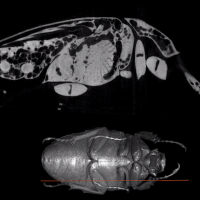
If you had x-ray vision, where would you look first? Some of our biologists have looked inside of beetles to learn more about how they breathe and fly.

Break Proteins in Eggs
Yes! You can do science at home and in your classroom. Biologist Melissa Wilson walks you through a fun experiment with proteins.
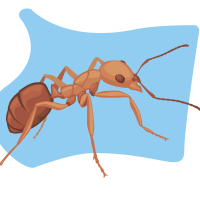
Build Your Own Ant Farm (Part 1)
Building Your Own Ant Farm is a 2-part Ask A Biologist video with Dr. Biology and Rebecca Clark on how to build an ant farm with two recycled CD cases. Watch part two.
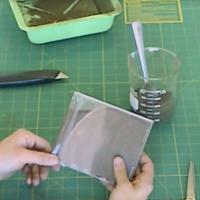
Build Your Own Ant Farm (Part 2)
Building Your Own Ant Farm (Part 2 of 2). Ask A Biologist video with Dr. Biology and Rebecca Clark on how to build an ant farm with recycled CD cases. Watch part one.
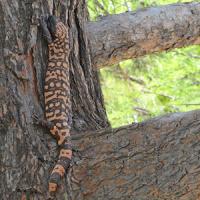
Clawed Climbers?
If you spend some time hiking around the American Southwest, you might be lucky enough to spot a Gila monster. But you probably won't see one climbing a tree.

Collecting Ice Cores in the Arctic
Imagine you want to pull a long cylinder-shaped piece of soil (called a core) out of the ground in your backyard. What kind of tools would you need? Find out how researchers collect cores in the Frozen Arctic.

CRISPR Science
Get the 411 or in this case the ATGC on DNA and the new gene editing tool called CRISPR.
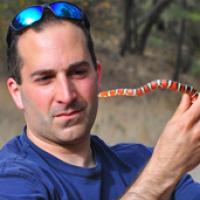
Dr. Biology Visits the Laboratory of Michael Angilletta
Dr. Biology drops in on biologist Michael Angelletta and the researchers in his laboratory. Besides getting a fun tour of the place, he learns how they study animals and their methods of heating and cooling their bodies.

Dr. Biology Visits with Biologist Jon Harrison
Giant beetles, flying treadmills, oxygen and prehistoric insects are just a few of the things that Dr. Biology learns about when visiting with biologist Jon Harrison.
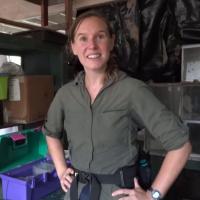
Dr. Biology visits with Biologist Kate Ihle
Dr. Biology interviews research scientist Kate Ihle at Barro Colorado Island in Panama. BCI is part of the Smithsonian Tropical Research Institute.
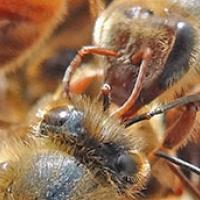
Honey Bee Waggle Dance
Honey bees use a waggle dance to communicate the location, distance and quality of a flower to other bee workers. But what does this dance actually look like?
How to Make an Origami Protein Channel
When was the last time you folded a piece of paper to make a fun shape? Maybe you made a paper plane or tried origami to make a swan. Believe it or not, the building blocks inside your body also need to fold into the right shapes to work properly. In this activity, you can build your own protein channel from paper.

Leafcutter Ant Life
There is an endless march going on in the rainforest, as tiny farmers collect food to bring back to their fungus. Join us in the rainforests of Panama as we take a closer look at the life of the leafcutter ant.
Life in the Cold
How do animals keep warm when the temperatures drop? It is not like they can turn on heater or bundle up in a layers of warm clothes like humans do. Before you watch this video, try to think of ways animals might keep warm.
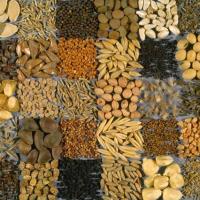
Make Your Own Pocket Seed Viewer
Step-by-step tutorial for building your own Pocket Seed Viewer. You can use it to test the effects of light, dark, temperature and gravity on seed germination and plant growth.

Mysterious World of Dr. Biology
Very strange things have been taking place lately. Dr. Biology and his team need your help to solve the mystery and piece together what's been happening in the lab.

See DNA
Have you looked at DNA? Really, you can see DNA if you follow along with biologist Melissa Wilson. This kitchen and classroom experiment is perfect for budding biologists.
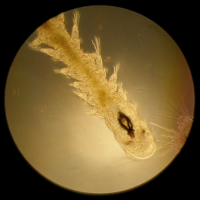
The Invisible Watery World of Plankton
When you visit a pond or the beach, what kinds of living things do you see in the water? Don’t let your eyes fool you… there’s a hidden world in water full of creatures too small to be seen!
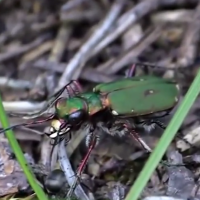
Tiger Beetle Observations
What animal runs so fast that it temporarily goes blind? It turns out that these tiny insects are fast, but don't have enough brain power to keep up with their speed. Learn more about these tiny tigers in this video.

Be Part of
Ask A Biologist
By volunteering, or simply sending us feedback on the site. Scientists, teachers, writers, illustrators, and translators are all important to the program. If you are interested in helping with the website we have a Volunteers page to get the process started.
