Focusing on Physiology

Karla Moeller Pierce Hutton
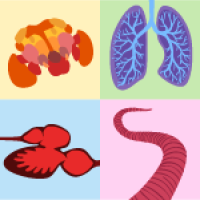
As you go about your day, breathing and thinking, with your heart beating, your body is working. It sends and receives signals, grows, and stores fat, among hundreds of other functions. All of these functions make up your physiology, or how your body works. The same is true for every living animal.
Many science teachers tell jokes in the classroom, but should they? Scientists found that overall, students like it when their science teachers tell jokes, but girls and boys react differently to certain types of jokes. science classroom Emily Webb Katelyn Cooper

Mending with Microbes

Pierce Hutton
Microbes are all around us, and some have the power to hurt or to help. Rosa Krajmalnik-Brown studies the ability of microbes to help, whether deep in our guts or in the environment.
Also in: Español

Cooperation or Conflict?

Ioulia Bespalova
Humans have evolved to work together, but it isn't always straightforward. Some people try to bend the rules, or cheat. Athena Aktipis studies what makes cooperation work, and why cheating sometimes backfires.
Scientists thought that flying reptiles known as Pterosaurs were slowly dying off before an asteroid caused a huge die-off on Earth. But new fossils found in Africa tell a different story. Pterosaur fossil Leslie Minton
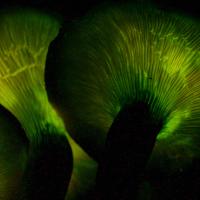
Some organisms, like this fungus, are able to glow, as if they were from an alien planet. But until recently, plants couldn't glow. Learn how scientists have found a way to make plants glow here on Earth. Glowing fungus Alison Willis
Some ticks carry a nasty bacteria that they can pass on to humans when they bite. Learn how the health status of the humans they bite helps control what they pass. Deer tick Karla Moeller
Subscribe to