

Read our stories
Listen and watch
Play our games
Enjoy our activities
Welcome to Ask A Biologist. This site has a large collection of biology learning materials that includes stories, games, activities, videos, and a podcast.
Read our stories
Listen and watch
Play our games
Enjoy our activities

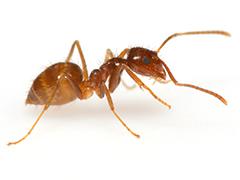
Ants are everywhere - they thrive in forests, fields, deserts, and cities all over earth. But what is the secret behind their success? Like humans, ants are social. They live and work together in highly organized societies called colonies.Also in: Español…
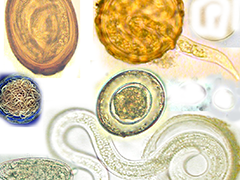
We are often taught that germs are bad, but what if exposure to germs or other microorganisms has long-term positive effects? Recent studies show that certain microbes in our environment might actually offer a protective effect against Alzheimer’s Disease.
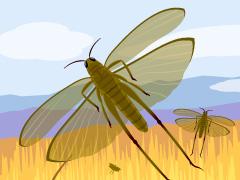
Arianne Cease isn't just any locust biologist. She's also a sustainability scientist, as she's bringing together all kinds of researchers to work on reducing the number of locust swarms, which affect 1 in 10 people across the globe.

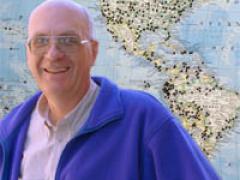
An interview with biologist David Pearson, an author and expert on tiger beetles. Did you know that tiger beetles can run so fast that they go blind and just what would it be like to be hunted by these tiny, but ferocious animals? These are a few of the questions that we learn…


There is more to our memory than you might think. In fact, we have three types of memory. Just how these memory systems work, and work together is the subject of this episode. We also learn that there are sometimes errors in our memory. Take a few minutes to learn how we remember things and even…

How can you save water? You might start by figuring out what uses the most water in your life. In this choice-…

The shape of a molecule is very important. It’s what makes it possible for proteins to interact with other parts of the cell. In…

Build your own monster by decoding the monster genome in Monster Maker, a DNA game. It is not very different from what…
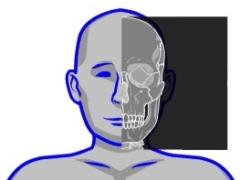
To explore the bones of the human skeleton, check out our Skeleton Viewer. Take a look further inside of a bone…

DNA is the key to life, so it's no wonder that we've been working to crack the code. With the tool CRISPR Cas9, we'…
Play the Bionanoengineering Game
Basic building patterns can be used to think about how technologies are built at the nano-scale. Try your hand…
Play doctor in the 21st century! Practice modern medicine by examining all dimensions of the body, from organs to molecules, as…
