Plosable Articles

PLOSable Biology

Scientists are learning new things every day. They are also writing about their discoveries. In most cases they publish in science magazines called journals like the Public Library of Science (PLOS). In our PLOSable section you will find stories that will help you read and explore the articles written by scientists.

Now jump in and start exploring PLOSable - a place where firsthand science is only a mouse click away. If you're interested in diving even further into the world of the scientific article, check out our Anatomy of an Article story. We also have stories exploring articles in evolutionary medicine in our EvMed Edits section.

Is a City Slicker Sicker?

Written by: Pierce Hutton

City life can be stressfull for people, but what about for other animals? Learn what scientists found out about the effects of city life on the stress and health levels of birds. 

Is It Easy Being Green?

Written by: Brett Seymoure

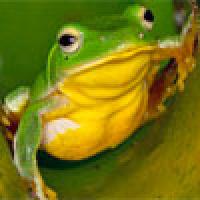
The story of a frog's life in the rainforest can be one filled with danger. Some frogs are brightly colored and other blend into the forest. Do bright colors work better than dull colors for keeping a frog from being eaten?

Is The Letter "A" Red?

Written by: Wesley Tierney

Do you think math would be easier if the numbers were color coded? For people with synesthesia, remembering might be a bit easier due to differences in how their brains work. Synesthesia happens when senses—taste, hearing, smell, sight, or touch—that are normally not closely linked are experienced together.

Isn't It Ionic?

Written by: Ryan LaMarca

Mud may look boring, but it has a lot more going than you might think. Some clays can kill bacteria, but exactly why they could wasn't clear. Scientists tested whether bacterial killing ability of some clays is due to the ions attached to them.

It's Raining Cats and Dogs... and Mushrooms

Written by: Michele Clark

Mushrooms release billions of spores into the air each year. Could those spores help promote rain by seeding new rain clouds?

Jumping Genes of the Kangaroo

Written by: Sarah Ly

Have you ever wondered how different animals are related? Marsupials like kangaroos live in Australia, but scientists think they may have traveled there from as far away as South America.

Larval Beetles Spin Their Wheels on the Beach

Written by: David L. Pearson

Wheels are common in our lives but rare in nature. A larval tiger beetle is one of the few animals in the world that turns into its own wheel to help it move along sandy beaches.

Lasers light up memories

Written by: Pooja Kher

Have you ever wondered how our brains remember things, especially scary moments? Neuroscientists are figuring it out by using a special laser to spark those memories in mice, like flipping an emotional light switch.

Lazy Eyes Hard at Work

Written by: Juliana Goenaga

Mom might have told you that video games would rot your brain, but scientists are finding ways to use video games to make your brain stronger. This is especially true when it comes to treating vision disorders like a "lazy eye."

Learning Science With the Hobbits

Written by: Sareh Seyedi, Stefania E. Kapsetaki, Carlo C. Maley

We use analogies all the time to help us explain things. But what if we could use characters from a famous story – the Lord of the Rings – to learn about different life strategies of organisms?

Local Fly Food Secrets

Written by: Madeline Sopa

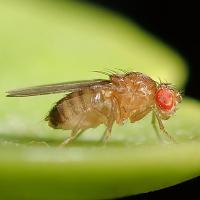
Could differences in the food animals like be enough to eventually separate one species into two? Learn what flies are teaching us about what can cause new species to form.

Looking for E. T.

Written by: Courtney Bruce

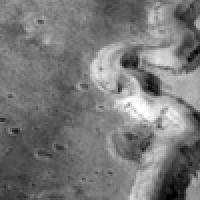
Life on other planets. Is it possible? Are there going to be little green people, or a friendly Martian? This PLoS article is the story about how scientists are looking for life beyond our planet.

Making Medicine from Mushrooms

Written by: Megan Turnidge

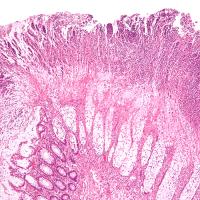
Mushrooms can be mysterious. You might know that some are poisonous while others can be tasty, but did you know that a few kinds can be used as medicine? Learn more about the new ways scientists are using mushrooms to treat cancer. 

Mischievous Microbes

Written by: Gayetri Ramachandran

You may have heard that bacteria can be good or bad. But what if some bacteria can be both? Let’s find out more about bacteria that are sometimes mischievous.

Motions of Magic

Written by: Patrick McGurrin

Magic might be real, at least in the brain, for some people. Scientists are finding that magicians' brains are wired differently than those of the average person.

Nature's Balancing Act

Written by: Stephanie Vera

When humans change an environment, it means we can lose species. And losing species is bad news for humans, animals, and the environment.

New World Under the Sea

Written by: Savanah McMahon

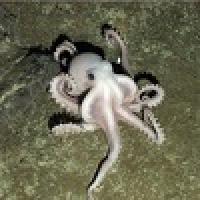
Sea life might not appear to be restricted to living in certain areas. But often they can only live in specific areas, even in the deepest parts of the ocean.

Of Mice and Men: Using Mice to Study Human Brains

Written by: Anika Larson

Scientists can make great discoveries doing experiments on mice. But it turns out they aren't always as successful as they think.

One-Two Punch for Tuberculosis

Written by: Shima Shiehzadegan

Tuberculosis (TB) can be a lethal infection that affects your lungs and can make breathing difficult. Here, scientists investigated how a new TB drug, called bedaquiline (BDQ), works in the body, and which combination of medications helps BDQ work better. 

Organ Swap

Written by: Lindsey O'Connell

A transplant is what happens when doctors take a body part from one person and give it to another person, kind of like Frankenstein except not so scary-looking. Scientists are hard at work on some of the most difficult parts to transplant like hands and faces.

Anyone can use PLOS and PLOS Biology. You do not have to pay to read articles online or to download and print them. With PLOS and PLOS Biology you have first-hand access to the latest science.

Want to write a PLOSable story? Take a look at our Notes to Authors and Artists.

Learn how to read a scientific article

Be Part of
Ask A Biologist

By volunteering, or simply sending us feedback on the site. Scientists, teachers, writers, illustrators, and translators are all important to the program. If you are interested in helping with the website we have a Volunteers page to get the process started.

Donate icon  Contribute

Share this page