Plosable Articles

PLOSable Biology

Scientists are learning new things every day. They are also writing about their discoveries. In most cases they publish in science magazines called journals like the Public Library of Science (PLOS). In our PLOSable section you will find stories that will help you read and explore the articles written by scientists.

Now jump in and start exploring PLOSable - a place where firsthand science is only a mouse click away. If you're interested in diving even further into the world of the scientific article, check out our Anatomy of an Article story. We also have stories exploring articles in evolutionary medicine in our EvMed Edits section.

Plant and Microbial Invasions

Written by: Wendal Kane

All over the world, plants are dependent on secret partners—bacteria and fungi—for their survival. But what happens to these relationships if new, exotic plants move into the area?

Planting Pollinator Grocery Stores

Written by: Meghan Duell

When humans build cities, we change the environment a lot for many of the animals living in the area. What can we do to help out the insects and other pollinators living in the city?

Prey Pretend to be Predator

Written by: Zack Graham

If you are a moth, seeing a spider is probably one of your worst nightmares. Biologists have learned that some moths pretend to be spiders to confuse other spiders. Learn more about how these moths survive by fooling their predators.

Proof Is in the Poop

Written by: Han Duerstock

Most people believed that Neanderthals, a species related to humans, were hunters that only ate meat. By taking a look at the Neanderthal’s fossilized poop, scientists discovered that there was more to their diet than just meat.

Ranked and Ready: The Most Important Diseases To Study

Written by: Megan Berry

Are we armed with all the information to fight the worst diseases, even the ones that we’ve just discovered? Scientists wanted to create a list to identify the worst diseases to gain more information and be ready to help treat these diseases. 

Rare Species Work Hard

Written by: Natasha Coult

There are different ecosystems all around the world. All of these ecosystems are supported by the animals, plants, and other things living there. Researchers are learning that even the very rare species are important for an ecosystem to survive. 

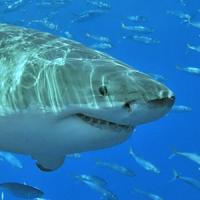
Rethinking Sharks

Written by: Chelsea Brzezinski

In Peru, how humans feel and what they know and do about sharks can have big consequences. How do human beliefs impact shark conservation?

Robo-Mutants!

Written by: Craig Trevor Johnson

Mutant robots with six arms and a mind of their own are stuff of science ficiton, right? Scientists are challenging that idea by creating robo-mutants in the lab and seeing how they evolve.

Science of Teamwork

Written by: Viviane Callier

Scientists study the science of basketball teamwork and how different networks can make the difference between winning and losing.

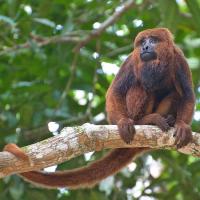
Seedy Secrets in Primate Poop

Written by: Kathryn Michelle Benavidez Westrich

How do seeds travel if they do not have legs to carry them? We can find one answer in primate poop.

Shape-shifting Brain Cells

Written by: Tabitha Green

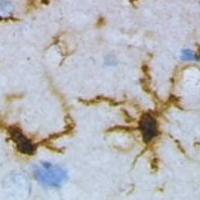
Recently, scientists have tried to break into the secret world of microglia (the brain’s immune cells). They are trying to figure out how these cells can shape-shift into weird and wonderful formations.

Shimmery Defense

Written by: Melinda Weaver

Many animals, including humans, build homes to live in. But when you have a home, you often need to work hard to defend it. In this article scientists discovered a peaceful defense mechanism that giant honeybees use to fend off predators and protect their homes.

Shorter Winters and Wolf Leftovers

Written by: Chelsea Brzezinksi

In Yellowstone National Park, winters are getting shorter and there is less food for scavengers. That’s bad news for scavengers like bears, but could wolves help?

Should Science Teachers Try to Be Funny?

Written by: Emily Webb, Katelyn Cooper

Many science teachers tell jokes in the classroom, but should they? Scientists found that overall, students like it when their science teachers tell jokes, but girls and boys react differently to certain types of jokes.

Sleeping Secret Behind Bullying Behavior

Written by: Bethany Vu

Could more sleep make fewer bullies? Scientists have learned that there may be a link between sleep, technology, and bullying behavior.

Sleeping Viruses

Written by: Ian Vicino

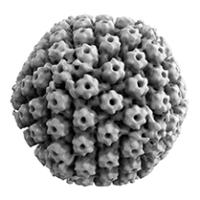
When a virus infects our cells, it can do a lot of damage. But, in some cases, certain viruses get into a cell and go dormant, kind of like they are taking a nap. If we are going to better fight viruses, we need to know what viruses do when they are dormant.

Speed of the Human Brain

Written by: Devin K. Phillips

The human brain works quickly and handles difficult tasks. Is it just the size of our brains that allows us to do these things? As it turns out, it may also have a lot to do with how well our brain cells can send multiple messages to other cells.

Spicy is Tasty to Tree Shrews

Written by: Ananya Sen

Tree shrews eat plants that are extremely spicy, while most other animals avoid these plants. What makes them able to stand this spiciness?

Spies Among Ants

Written by: Tyler Quigley

As most spies know, the best way to infiltrate a group is to look and act like the members of that group. But what does it take to be a spy among ants? One beetle may have figured out the ultimate ant imitation strategy.

Spreading Stories of Sickness

Written by: Karla Moeller

Watching the news is a daily part of life for some people. What effect does that action have on the rest of your life? Scientists studied whether news reports can influence what you search for or communicate through your network when online.  

Anyone can use PLOS and PLOS Biology. You do not have to pay to read articles online or to download and print them. With PLOS and PLOS Biology you have first-hand access to the latest science.

Want to write a PLOSable story? Take a look at our Notes to Authors and Artists.

Learn how to read a scientific article

Be Part of
Ask A Biologist

By volunteering, or simply sending us feedback on the site. Scientists, teachers, writers, illustrators, and translators are all important to the program. If you are interested in helping with the website we have a Volunteers page to get the process started.

Donate icon  Contribute

Share this page